List of 100+ Heritage Brands – Page 3

Brands 49–72 of 121. Back to page 1 · Browse brands A–Z

Brands

121 brands

Florasis featured image

Florasis

China · Est. 2017 · Luxury

Florasis is a Chinese beauty house that has done something almost no other modern cosmetics brand has managed: build a global following on the aesthetics of its own culture rather than an imported one. Born in 2017 beside the West Lake in Hangzhou, the brand takes its Chinese name, Hua Xi Zi, from the same landscape, and its logo depicts a petite window looking out onto it. The formulations are built on floral essence, with nourishing botanical extracts including snow lotus, lotus collagen peptide and ginseng, drawing openly on nature and traditional Chinese medicine. Loose powders, cushion foundations, lip products and carved eyeshadow palettes make up a range where the object itself is as considered as the formula. That craft focus is the brand's real differentiator. Florasis collaborates directly with named traditional Chinese artisans: locksmith Xiang Yonglin on the Love Lock Lipstick, woodcarver Du Jufang on its embossed palettes, silversmith Long Taiyang on the Miao Series and ceramicist Wang Xiaodan on porcelain-inspired pieces. Collections including Song Brocade Prestige, the Embroidery Series and Flower Goddess treat makeup as inherited cultural artwork rather than seasonal product. The brand positions itself around redefining professional makeup and beauty artwork, and social responsibility sits among six stated brand promises. Florasis has also expanded internationally while keeping its design language and ingredient philosophy intact. Priced in the luxury tier, it is a serious answer for anyone seeking natural, botanically formulated beauty with genuine cultural heritage, craftsmanship and packaging that is itself a collectible object.
Fashion Fair featured image

Fashion Fair

United States · Est. 1973 · Mid-range

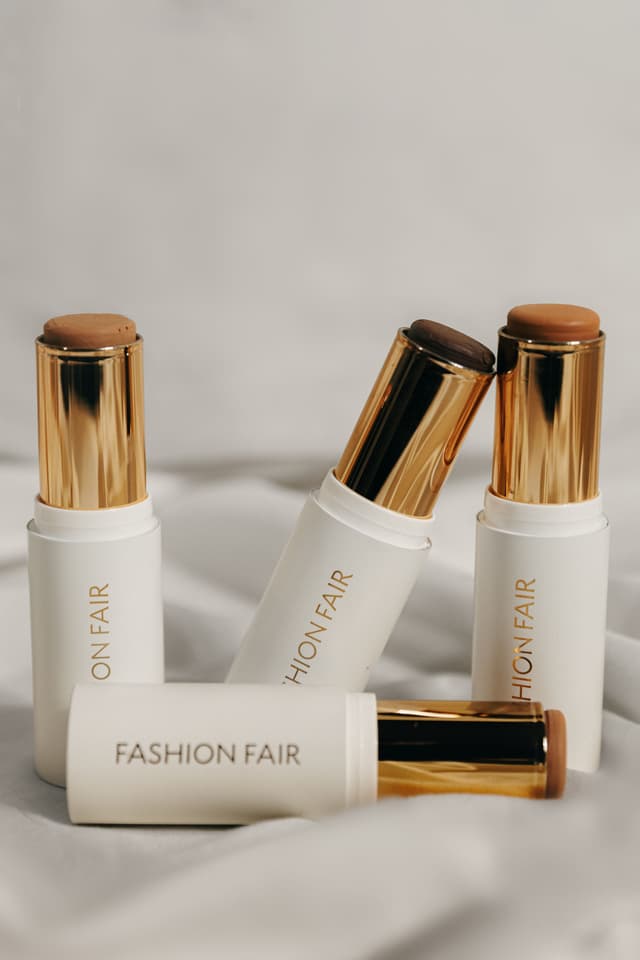
Fashion Fair is a landmark in American beauty and one of the most historically significant Black-owned cosmetics brands ever created. Founded in 1973 by Eunice Johnson of Johnson Publishing, the company behind Ebony, it was the first international prestige cosmetics brand developed for deeper skin tones, sold in stores from Neiman Marcus to Printemps at a time when no major house served those customers at all. That history is the brand's foundation, not its whole story. After acquisition and relaunch, Fashion Fair is once again Black-owned and led by Black women executives, both formerly of Johnson Publishing, continuing a lineage rather than borrowing one. Its return has been widely covered in the American press as a rare example of a heritage Black-owned brand returning to Black ownership. The brand describes itself as celebrating diversity, pioneering beauty and elevating deeper skin tones since 1973, and marks fifty years of Black beauty. The modern range focuses on complexion, built around the unique undertones of deeper hues, with iconic formulas reworked using natural ingredients hand-picked by a product development team working alongside renowned dermatologist Dr Caroline Robinson and celebrity makeup artist Sam Fine. All products are cruelty-free and vegan. Priced in the mid-range tier, Fashion Fair sits where it always has: prestige quality at a price its community can actually access. For shoppers searching for vegan, cruelty-free, women-owned and Black-owned American beauty with genuine heritage behind the claim, Fashion Fair remains without equivalent.

FACE Stockholm featured image

FACE Stockholm

United States · Est. 1982 · Mid-range

FACE Stockholm is a Swedish-American beauty brand and one of the few independents in colour cosmetics still owned by the family that started it. Founded in 1982 in Stockholm by Gun Nowak and her daughter Martina Arfwidson, it is, more than forty years later, still owned and operated by the same mother-and-daughter pair, trading under the line beauty, wit and grace since 1982. The philosophy is Scandinavian in the best sense: colour treated as play rather than correction. The brand describes makeup as a playful theatre and a canvas where you can be anyone, and the range backs that up with an enormous shade library across lips, eyes, nails and complexion, alongside skincare and professional brushes. Products are manufactured to high standards using naturally derived ingredients, and the brand is PETA Approved, displaying the certification directly. It does not conduct or endorse cosmetic testing on animals. Formulations are hypoallergenic. Notably, FACE Stockholm is transparent that parabens are currently used in some formulations, publishing that fact openly while committing to monitor the research, an honesty most brands avoid. Manufacturing is disclosed by category: pencils in Germany and Italy, foundations, shadows, lip products and nail polish in the United States, skincare in the United States and Sweden. The brand also operates its own retail stores, where the full shade range can be tested in person. Priced in the mid-range tier, it offers heritage and enormous colour choice at accessible cost, and remains a rare survivor among family-owned cosmetics houses.

Evolu featured image

Evolu

New Zealand · Est. 1997 · Mid-range

Evolu is a New Zealand botanical skincare brand that has been formulating since 1997, making it one of the country's longest-established natural beauty houses. Founder Kati Kasza drew on a Hungarian upbringing shaped by a winemaker father and a herbalist mother, and that dual inheritance of craft and plant knowledge still runs through the range. The formulations are built on bioactive ingredients from natural botanicals, with centuries of indigenous Māori plant wisdom guiding the selection of native species. Kawakawa, long used in traditional Māori medicine for its soothing properties, kūmarahou and harakeke all appear, alongside more conventional actives. The brand describes itself as masters of botanical skincare, and the catalogue covers cleansers, serums, moisturisers, treatments and body care. Its exclusion list is specific: no parabens, petrochemicals, mineral oils, phthalates, sulfates, artificial colours or fragrances, no genetically engineered extracts, and no palm oil used as a single ingredient. Water-free products are preservative-free entirely. Most of the range is vegan, with a small number of products containing bee-derived ingredients. Evolu does not test on animals, and requires all ingredient suppliers to certify the same. Environmentally, the brand has been a certified CarboNZero business since 2009, audited annually, and uses recyclable and reusable glass and paper packaging. It supports native tree planting through Trees That Count, and remains independently run rather than group-owned. Priced in the mid-range tier, Evolu suits anyone seeking natural, vegan, paraben-free and sulfate-free skincare with genuine carbon credentials and nearly thirty years of formulation experience.

Deborah Lippmann featured image

Deborah Lippmann

United States · Est. 1999 · Mid-range

Deborah Lippmann, now trading as LIPPMANN, is an American nail care brand founded by one of the most recognisable celebrity manicurists in the industry. For more than twenty-five years the brand has argued a position that seemed unfashionable when it launched and is now mainstream: that healthy nails come first, and colour should never be applied at their expense. The range is treatment-led. Base coats, top coats, strengtheners, cuticle care and hand treatments carry equal weight with the colour collection, and the brand's polish shades, often named after songs, have become collectible in their own right. Gel-effect finishes and long-wear formulas round out a catalogue built for both salon and home use. That shade naming, drawn largely from music, has become part of the brand's identity and a reason collectors return to each release. Formulations are the technical differentiator. LIPPMANN polishes are formulated 21-Free and 25-Free, made intentionally without the twenty-five ingredients most commonly used in nail polish and most commonly linked to health concerns, sensitivity, hormone disruption and environmental harm. Products are vegan, containing no animal by-products, and the brand does not test on animals. Priced in the mid-range tier, LIPPMANN sits above drugstore polish and below salon-exclusive systems, which has made it a long-standing choice for people who want professional results without professional appointments. For shoppers searching for vegan, cruelty-free, non-toxic American nail care from a women-owned brand with genuine longevity and a treatment-first philosophy, LIPPMANN remains among the most credible names in the category.

Cinema Secrets featured image

Cinema Secrets

United States · Est. 1985 · Mid-range

Cinema Secrets is an American professional makeup house that has spent four decades solving problems for people who apply makeup for a living. Founded in 1985 in Burbank, California by Maurice Stein, a working makeup artist with more than two hundred films and four thousand commercials behind him, it remains family owned and operated across three generations, which is rare in a category dominated by conglomerates. The brand is best known for its brush cleaner, an industry standard on film sets worldwide, but the range extends far wider: foundations and concealers, colour correctors, face and setting powders, highlighters, luminizers, setting sprays, brushes, sponges, skincare and a substantial costume and stage makeup line built for theatre, film and special effects work. The formulation philosophy is corrective rather than cosmetic. These are HD-performance products developed to hold under studio lighting and long shooting days, which is why they behave differently from consumer makeup and reward proper technique. Cinema Secrets does not test on animals, and specific products are flagged as vegan, talc-free or gluten-free at item level rather than across the whole catalogue. Priced in the mid-range tier, with brush cleaner kits and setting powders at accessible price points, the brand sits somewhere unusual: professional credibility at costs ordinary shoppers can absorb. Stein's decades of volunteer work with cancer patients and burn survivors is part of the company's identity too. For anyone searching for professional-grade, cruelty-free American beauty with genuine Hollywood heritage rather than borrowed styling, Cinema Secrets is one of the industry's most trusted working names.

Bésame Cosmetics featured image

Bésame Cosmetics

United States · Est. 2004 · Mid-range

Bésame Cosmetics is an American beauty house devoted to a single idea: that the glamour of the twentieth century is worth reviving properly. Founded in 2004 by Gabriela Hernandez, a cosmetic historian and author who emigrated from Buenos Aires, and run with her husband Fergus, the brand recreates archival formulas and packaging from the 1920s through the 1970s. This is not retro styling applied to modern products. Bésame researches original formulations and reissues them, from a cake mascara revived from a hundred-year-old formula to lipsticks named for the year of their shade, such as Enamorada 1947. Gold-plated compacts, cream rouge and loose face powders are made as collectible objects, and the brand's telling of the 1912 suffrage red lipstick story has become part of its identity. Disney and Marvel collections sit alongside the archive. Formulations are free from harsh chemicals, parabens, mineral oils and gluten, and the brand is 100% cruelty-free with no animal testing. Hernandez works directly with the chemists. Bésame has also operated sustainably for over seventeen years, using reusable and refillable packaging and biodegradable materials, which suits a brand designed to be kept rather than discarded. Priced in the mid-range tier at roughly ten to thirty-six dollars, it competes on craftsmanship rather than novelty. For shoppers seeking paraben-free, cruelty-free, women-owned American beauty with genuine historical depth and packaging built to last, Bésame is without real equivalent.

Caulaincourt featured image

Caulaincourt

France · Est. 2008 · Mid-range

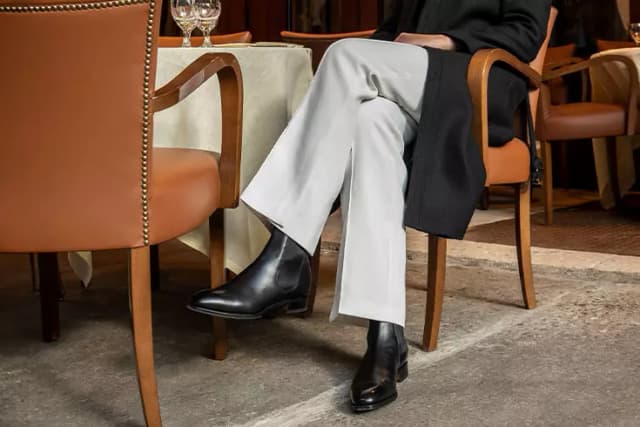
Alexis Lafont launched Caulaincourt in Paris in 2008 with a small collection of men’s dress shoes. The house has expanded into loafers, boots, slippers and sneakers, but its best-known feature remains the hand-applied patina: customers can choose a nuanced colour finish rather than being limited to a standard shade. Caulaincourt also offers made-to-order variations for more extensive personalisation. The shoes are made through specialist workshops in several European countries, including France, Italy and Spain; the place of manufacture depends on the model. Caulaincourt uses different construction methods for different shoes, from refined dress styles to more robust boots. Its services include resoling and recolouring, and it offers resoling for its B.A.N.D.I.T sneakers. The brand sells online and through Paris boutiques, including its Rue de Courcelles location. Fit can change between Caulaincourt models, so the house provides a model-based size guide rather than treating one size as universal across its collection.

Mariano Shoes featured image

Mariano Shoes

Portugal · Est. 1945 · Mid-range

Mariano Shoes began in 1945 when shoemaker Mariano de Jesus Gomes started producing footwear under the Mariano name in São João da Madeira, Portugal. The company now operates in nearby Oliveira de Azeméis and continues to describe its shoes as handmade, from the first leather cut through the final polish. Its current shop covers men’s and women’s footwear, including loafers, sneakers, boots and more formal shoes. Some men’s designs have special-size options, which are worth checking if a standard size range has been limiting. The brand sells directly online and provides product-specific size and availability information for its different collections. Mariano says its footwear can be restored, extending the useful life of a pair. It also reports using recycled-material packaging. Those are more specific points to consider than a general sustainability label, while the materials and construction of a particular shoe should be checked on its listing.

Crown Northampton featured image

Crown Northampton

UK · Est. 1908 · Mid-range

Crown Northampton is the flagship footwear brand of a family shoemaking business established in 1908 by Ernest Woodford. The business began in London and later moved to Northampton, a town closely associated with English shoemaking. It remains under Woodford family ownership, with fifth-generation shoemaker Chris Woodford directing the company. The range brings traditional shoemaking methods to contemporary sneakers, shoes and boots. Its collections include understated leather sneakers and more substantial stitched styles. Crown says its footwear is made from start to finish in England, with every pair produced to order at its Northampton factory. That makes it useful to check the stated production time before purchasing, as an order is made specifically for the customer. Crown Northampton sells directly through its website and offers fitting guidance for shoppers comparing its sizes with familiar sneaker brands. Customers can also enquire about a factory appointment. The brand’s focus on individual production and local craftsmanship is central to its identity; materials and construction differ by collection, so the product page is the best reference for a particular pair.

White Kloud featured image

White Kloud

Japan · Est. 2005 · Mid-range

White Kloud is a Japanese custom boot workshop established by shoemaker Show Goto in 2005. Its central offering is a pair made for one customer by one craftsperson, who takes it through the stages from cutting the leather to attaching the sole. Customers seeking White Kloud bespoke boots should expect a workshop-led process rather than a standard selection of ready-to-wear sizes. Goto’s path to bootmaking included work with motorcycle boots, foot massage, shoemaking study and shoe repair. He says those experiences shaped his aim to make boots that are gentle on the feet. White Kloud combines the appearance of substantial leather boots with close attention to construction and individual fit; a visit to the workshop is part of its invitation to custom-order customers. The workshop is in Koshigaya, Saitama, outside central Tokyo. Its website also presents Jack & White Brothers, a separate, small-production boot line made with specialist Japanese craftspeople and offered through the online store. Check which line a listing belongs to before comparing availability, sizing or ordering arrangements.

Brass Tokyo featured image

Brass Tokyo

Japan · Est. 2007 · Mid-range

Brass Tokyo began in 2007 as a shoe repair workshop in Setagaya, Tokyo. Founder Minoru Tokuyama built the business around keeping well-loved footwear in use through repair and customization. That experience led to CLINCH BOOTS, Brass’s own footwear line, in 2012. Today, people searching for Brass Tokyo boots will usually encounter CLINCH alongside the workshop’s repair services. CLINCH makes leather boots and shoes in Brass’s workshop using shaped lasts and hand-sewn welted construction. Its approach draws on classic footwear, with an emphasis on how a pair fits, ages and can be repaired over time. The Brass site also carries related projects, including Bruschetta Shoes and shoe-care goods, so it helps to distinguish the workshop from its CLINCH brand when browsing. Brass has a store in Daita, Setagaya, and lists stockists for shoppers elsewhere. Its online shop offers a way to explore current models, while customers interested in a custom order or repair can contact the workshop directly. Check the store’s current opening information before visiting, as its holidays vary.

G

Guild Tokyo

Japan · Est. 1996 · Mid-range

Guild of Crafts is a Japanese shoemaking house founded in 1996 by Chihiro Yamaguchi. Yamaguchi began making shoes in Kyoto in 1980 and later studied shoemaking in England. He established Guild of Crafts at a time when bespoke shoes were still unfamiliar to many customers in Japan, developing the house’s own methods for measuring feet and making lasts. Guild offers bespoke, made-to-order and ready-to-wear footwear. Bespoke begins with the customer’s measurements and a dedicated last, followed by fittings. Made-to-order uses an established Guild last, while ready-to-wear provides a finished-shoe option. Its model lists include Oxfords, buckle shoes and boots, with designs for both men and women. Availability depends on the ordering route and model. The official website explains the different lines and accepts appointment enquiries for orders, maintenance and repairs. Guild is a useful brand to consider when comparing Japanese bespoke shoemakers because customers can see how its approach to fit carries across three ways of buying a shoe.

Marquess Shoemaker featured image

Marquess Shoemaker

Japan · Est. 2011 · Luxury

Marquess is a bespoke shoemaking atelier established in Tokyo in 2011 by Shoji Kawaguchi. His interest in British footwear took him to Northampton, where he studied shoemaking, and later to training with bespoke maker Paul Wilson. Kawaguchi returned to Japan in 2008 and opened Marquess three years later. The atelier moved to Ginza in 2017. Marquess is known for understated leather shoes whose shape, fit and finishing receive close attention. A bespoke order starts with a meeting and foot measurements. The team makes a wooden last for the client, tests the fit with a trial shoe and adjusts the last before making the final pair by hand. The website shows Oxfords, derbies and other designs for men, as well as examples of women’s shoes. The atelier also offers made-to-order styles, where customers choose from existing models and select details such as leather and sole type. Bespoke enquiries require an appointment. Marquess is most relevant to shoppers seeking a personal fitting process and classic shoes they intend to maintain and wear for years.

Spigola featured image

Spigola

Japan · Est. 2001 · Luxury

Spigola is a bespoke shoemaking brand established in Kobe, Japan, in 2001 by Koji Suzuki. Born in Kobe, Suzuki travelled to Italy in 1997 and trained in Florence under shoemaker Roberto Ugolini. After three years of study, he returned home and began making bespoke shoes from space in his father’s workshop in Kobe’s Nagata district. Bespoke footwear remains central to Spigola. Its website also presents a prêt-à-porter collection described as pattern-order footwear, and Suzuki’s official biography dates the launch of that line to 2011. The distinction matters for shoppers: commissioning a bespoke pair and ordering from an established pattern are different ways to access the maker’s designs. Spigola’s atelier is in Hosoda-cho, Kobe, with weekend visits requiring a reservation. The brand’s identity brings together Suzuki’s Italian shoemaking training and his work in a Japanese footwear-producing city. Anyone considering an order should contact the atelier about the available styles, fitting process and appointment arrangements before travelling.

Hiro Yanagimachi featured image

Hiro Yanagimachi

Japan · Est. 1999 · Luxury

Hiro Yanagimachi is a bespoke shoemaking workshop in Tokyo, founded in 1999 by Hiroyuki Yanagimachi. After studying industrial design, Yanagimachi went to England to learn shoemaking at London Cordwainers College and gain experience with bespoke techniques. He began his own brand on returning to Japan and later developed a workshop team. Customers can choose among made-to-order, made-to-measure and bespoke shoes. The distinction is how the last—the form used to build the shoe—is prepared. Made-to-order uses one of the workshop’s established lasts; made-to-measure adjusts a base last; bespoke starts with a last made for the individual customer and includes trial fittings. The workshop offers lace-up shoes, loafers and other styles, with design choices depending on the order method. Visits to its Sendagaya workshop are by appointment. Customers can discuss fit with the people making their shoes, and the brand says enquiries and appointments can be handled in English. That makes its ordering process particularly relevant to international shoppers considering Japanese bespoke footwear.

Yohei Fukuda featured image

Yohei Fukuda

Japan · Est. 2008 · Luxury

Yohei Fukuda is a Tokyo shoemaker founded in 2008 by its namesake. Fukuda learned shoemaking in England, including training in Northamptonshire and work with London firms, before returning to Japan to establish his workshop. He oversees the design, last making and shoemaking alongside a small team of craftspeople. The business offers several ways to buy its classic men’s shoes: ready-to-wear, made-to-order, house-style bespoke and fully bespoke. Its ready-to-wear shoes draw on the workshop’s bespoke methods and are hand lasted and hand welted. Fit remains central to the offer; the online store lists several width options and provides a size guide, while made-to-order enquiries and appointments can be arranged through the Tokyo store. Fukuda is especially relevant to someone comparing Japanese bespoke shoemakers with British-influenced dress-shoe styling. The different order routes matter: a customer choosing an existing size is buying a different fitting experience from someone commissioning a pair around a personalised last. The official sites explain those options before an appointment or purchase.

Cobbler Union featured image

Cobbler Union

USA · Est. 2014 · Mid-range

Cobbler Union is an Atlanta-based men’s footwear brand founded in 2014 by Stephen Beehler, Daniel Porcelli and Santiago Pereiro. Its shoes draw on bespoke shoemaking details while being offered as a ready-to-wear collection. Production takes place in small batches in Europe, with a team in Spain overseeing quality and consistency. The range includes Oxfords, derbies, loafers and boots in leather and suede, along with belts and other leather goods. Cobbler Union points to details such as carefully finished soles and its signature quilted heel cups. It also uses different lasts across its models, so the shape and fit of one style may differ from another. Its fit guidance is worth checking before choosing a size. Customers can shop through the brand’s website or visit its Atlanta location. Cobbler Union is especially relevant to people looking for a US-based seller of European-made dress shoes with distinctive finishing, while still wanting familiar styles they can wear regularly.

Carmina Shoemaker featured image

Carmina Shoemaker

Spain · Est. 1997 · Mid-range

Carmina Shoemaker is a family footwear brand from Mallorca, Spain. José Albaladejo Pujadas founded Carmina in 1997, opening its first store in Palma. The newer brand grew from a much longer Albaladejo family shoemaking tradition on the island, which the company traces to 1866. Its shoes are made in Mallorca, with the family workshop associated with the town of Inca. Carmina makes leather footwear for women and men, including Oxfords, derbies, loafers, monk straps and boots. Goodyear welt construction is central to its work, and customers can choose among different lasts, leathers and soles. Alongside its regular collections, the brand offers custom options for shoppers who want to select details for a pair. Carmina’s appeal lies in its breadth: someone searching for a classic black Oxford can also compare less common leathers and contemporary shapes within the same shoemaking house. Its website sells directly and offers information on styles and fit, while its original Palma store remains part of the brand’s presence on Mallorca.

Norman Vilalta featured image

Norman Vilalta

Spain · Est. 2004 · Luxury

Norman Vilalta is a Barcelona shoemaker specialising in men’s bespoke, made-to-order and ready-to-wear footwear. Originally a lawyer in Argentina, Vilalta trained in shoemaking in Florence before establishing his own Barcelona workshop in 2004. For roughly his first decade as a shoemaker, he worked exclusively on bespoke pairs, building shoes around individual clients’ feet and developing his approach to pattern making and finishing. That experience now shapes the ready-to-wear collection. Vilalta designs his own lasts and is known for an asymmetric pattern and distinctive pitched heel. His shoes and boots are finished by hand; the brand says this stage takes several hours per pair. The Condal Collection brings elements of his bespoke practice to shoes available in standard sizes. Shoppers can explore the collections online or visit the Barcelona store on Carrer d’Enric Granados. Vilalta appeals particularly to people interested in expressive designs, hand-finished leather and the connection between a shoemaker’s bespoke work and his ready-to-wear range.

TLB Mallorca featured image

TLB Mallorca

Spain · Est. 2018 · Mid-range

TLB Mallorca is a men’s shoemaker based in Inca, a historic footwear town on the Spanish island of Mallorca. Antonio “Toni” Llobera Barceló founded the brand in 2018, drawing on three generations of family experience in leatherwork. The brand makes its shoes and matching belts locally, with Toni overseeing production and paying particular attention to the shape and fit of each shoe. Its range centres on Goodyear welted leather footwear: Oxfords, derbies, loafers and boots designed for formal and everyday wear. The Main Collection offers classic styles, while the Artista Collection adds details such as narrower waists, closely cut heels and finer finishing. Customers seeking a particular combination of model, leather and fit can explore the made-to-order programme. TLB Mallorca is a useful name to know for shoppers comparing Spanish dress shoemakers. Its defining details are its Inca production, welted construction and range of lasts. The official site sells the collections directly and provides a size guide and fitting advice.

Paolo Scafora Napoli featured image

Paolo Scafora Napoli

Italy · Est. 1956 · Luxury

Paolo Scafora Napoli is a family shoemaking business whose history begins in Naples in 1956. The business is named for its founder, Paolo Scafora. Paolo later developed the namesake luxury brand with his brothers, building on the family workshop and its tradition of handmade shoes. The collection includes Oxfords, Derbies, monk straps, loafers, boots, and sneakers. Customers can choose ready-to-wear shoes or explore made-to-order and bespoke services. The workshop uses construction methods including Bologna, Goodyear, Norwegian, and Tyrolean stitching, along with hand-painted finishes. Materials vary by shoe and include calfskin and cordovan. For a first purchase, the brand offers a “Fitting Pair” service: a trial shoe made to reproduce the shape and fit of the intended pair. Customers can then discuss any needed adjustments before placing the final order. Paolo Scafora also offers resoling, giving owners a way to maintain their shoes after wear. Purchases and service enquiries can be made through its official website.

Canfora featured image

Canfora

Italy · Est. 1946 · Mid-range

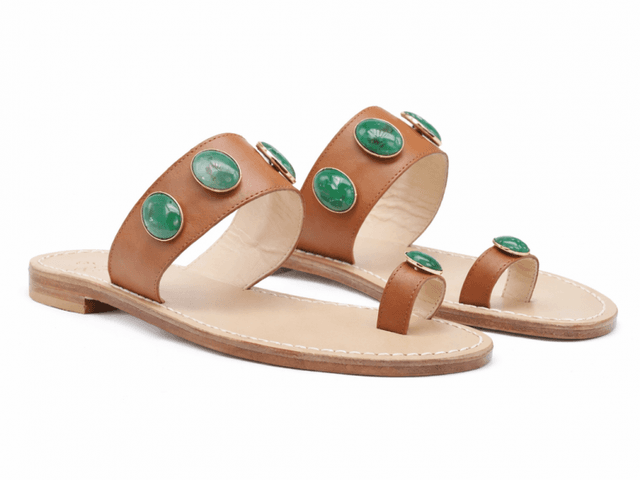
Canfora is a Capri sandal maker founded in 1946 by Costanzo Canfora, who opened a small workshop near the Grand Hotel Quisisana. The shop remains on Via Camerelle, where later generations of the family continue the sandal-making tradition. Canfora makes sandals for women and men in its Capri workshop using Italian materials. Its women’s collections range from minimal leather straps to pairs with decorative stones, rings, and other embellishments. The brand’s history also connects its enduring “K” sandal to a design Amedeo created for Jacqueline Kennedy. The construction is a useful point of distinction: Canfora says its layered leather soles are pressed and stitched, while the straps are nailed rather than glued in place. Customers can order through the website or visit the Capri shop to have their feet measured. For online orders, Canfora provides printable size patterns and heel options. Its size guide advises checking measurements carefully because the handmade, made-to-order sandals are generally not returnable.

Sandali Corcione featured image

Sandali Corcione

Italy · Est. 1925 · Mid-range

Sandali Corcione is a Sorrento footwear workshop that dates its handmade sandal tradition to 1925. Its workshop page names Costanzo Corcione as the founder and identifies Antonino Corcione as a later generation of the family. The shop is located on Corso Italia in Sorrento and sells through its own website. The collection extends beyond classic Capri and Positano sandals. Shoppers will find jewel sandals, ankle strap designs, bridal styles, men’s sandals and loafers, children’s footwear, and handmade bags. The brand offers customization of materials, colors, heel height, and size, while also allowing customers to order a design as displayed. Its size guide says the sandals generally follow standard sizing and provides printable foot templates and instructions for submitting measurements. Corcione says its creations use Tuscan leather and non-slip rubber. Orders for handmade or customized pairs may require several working days of preparation before dispatch. The website offers international delivery, with the final shipping charge shown during checkout. These details make the brand especially relevant to shoppers seeking a Sorrento sandal they can adjust to their preferred fit and finish.

Can't find what you're looking for?

We add new sites every week but if you have a specific request, let us know.