List of 300+ Women-Owned Brands – Page 2

Brands 25–48 of 332. Back to page 1 · Browse brands A–Z

Brands

332 brands

Paper Label featured image

Paper Label

Canada · Est. 2013 · Affordable

Paper Label is a Canadian minimalist clothing label for women, founded in Vancouver in 2013 by Teresa Lake. Lake started the brand to make modern, comfortable sleepwear in breathable fabrics, and it has since grown into a wardrobe of timeless, easy everyday wear and loungewear designed for comfort. The collection now spans sweaters, cardigans, tops, trousers, dresses, skirts and sleepwear. Pieces include the Serena Cropped Cardigan, the Cecilia Pullover, the Simone Button Up, the Lorne Oversized Sweatshirt, the Donna Shirt Dress and its Night Suit. Everything is designed and developed in Vancouver and manufactured overseas by a small group of long-term factory partners. Paper Label chooses fabrics by looking at their overall impact, from water and pesticide use to processing, care, longevity and biodegradability. It works with materials such as TENCEL, recycled nylon, organic and BCI cotton and LENZING ECOVERO viscose, lists certifications including GOTS, GRS, RWS and WRAP, and ships in compostable packaging to cut plastic waste. The independent label is woman-owned and women-run, and it sells online and through stockists across Canada and the US.

Waltz Studio featured image

Waltz Studio

USA · Est. 2014 · Mid-range

Waltz is a minimalist American designer clothing label for women, founded in San Francisco in 2014 by Danielle Colen. A native New Yorker with a background in landscape and architectural photography, Colen earned an MFA in fashion design at the Academy of Art University and worked as a patternmaker before launching her own line. Her love of strong lines and precise shapes runs through every collection, built on the belief that fashion should elevate the everyday without frills or excess. Inspired by the simplicity of menswear but cut for a woman's body, Waltz makes seasonless wardrobe staples: dresses, shirts, tops, trousers, jeans, skirts, jumpsuits, jackets and knitwear in natural fabrics such as cotton, organic cotton, linen, wool and lyocell. Patterns are cut in the San Francisco studio and garments are made in the USA. The label's ethical approach rests on domestic manufacturing, careful tailoring and long-lasting pieces designed to slip into an existing wardrobe rather than chase trends. Racked named Waltz a San Francisco womenswear brand to watch in 2016, and the label has been featured in Metal Magazine. Its collections have been stocked by West Coast boutiques including Voyager, Anaise and Anomie.

Maria La Rosa featured image

Maria La Rosa

Italy · Est. 1993 · Mid-range

Maria La Rosa is an Italian luxury handmade accessories label, founded in Milan in 1993 by designer Maria La Rosa. Drawing on a childhood in Sicily, she discovered an old loom in Paris and wove her first fabrics, using them in the Nineties to create her first bags with ancient techniques. Her daughters, Alice and Lisa, grew up among looms and shuttles and have worked alongside her for more than a decade in a women-owned family business. The heritage brand creates woven bags, clutches, socks, tights, pouches, hats and hair accessories, all made in Italy. Its iconic Game clutch is made from loom-woven ribbon that is then braided, and its socks, from silk to cashmere, are developed alongside every collection. Each piece is handmade in the atelier in a courtyard of old Milan, without mechanical aids and in limited editions. Loom weaving is combined with knitting, macramé, crochet and embroidery, using high-quality Italian yarns and favouring natural fibres, drawing on the brand's historic archive. Maria La Rosa socks were sold exclusively at Barneys for 25 years, and the brand is stocked by La Rinascente in Milan, Bergdorf Goodman in New York and selected boutiques worldwide.

Katie Kime featured image

Katie Kime

USA · Est. 2013 · Mid-range

Katie Kime is an American print-based lifestyle label, founded in Austin in 2013 by designer Katie Kime. She remains the company's founder, CEO and creative director, and describes the brand as a place where classic prep meets the West. Its philosophy is that self-expression turns everyday life into art, and its colourful designs aim to inspire women to live artfully, every day. The brand is best known for colourful wallpaper and home goods, and its clothing centres on pyjamas and sleepwear in its signature prints. Its city toiles, illustrated for places such as Atlanta, Dallas and New Orleans, appear on pyjama sets and sleep shirts, alongside designs like the Seaside Stripe and Swim Club pyjama shorts sets. It also makes tops, collegiate shirts and dresses such as the Natalie Dress. Beyond apparel, Katie Kime sells wallpaper, fabric, phone cases, Lucite trays, ice buckets and other home decor, all in the same colourful, print-led style as its sleepwear. The privately held company is led by Kime and sells mainly through its own online store.

OwnBrown featured image

OwnBrown

Switzerland · Est. 2015 · Affordable

ownbrown is a European lingerie label for women of colour, founded in Bellmund near Biel, Switzerland in 2015 by Nadine Ndjoko Peisker. A lawyer who has worked for the Swiss Federal Department of Foreign Affairs, Ndjoko Peisker started the brand out of frustration: as one of the few Black female lawyers in Switzerland, she could not find skin-coloured tights to wear to court or nude lingerie for under professional dresses and white shirts. ownbrown is built on the belief that freedom and confidence are gifts everyone deserves. The range includes bras, high-waisted briefs, thongs, tights and knee-high hosiery in a choice of nude shades tone-matched to brown skin, rather than treating beige as a universal nude. Pieces are made in Italy and designed to be comfortable and easy to wear. The black-owned, women-owned brand focuses on high-quality basics that let women dress confidently for work and every day, celebrating "your own brown" from London to Lagos. ownbrown has been featured in the Lingerie Journal and The New Black Magazine, and in 2019 its founder collaborated with Sephora.

Untitled in Motion featured image

Untitled in Motion

USA · Est. 2020 · Affordable

Untitled in Motion is an American designer clothing label for women, founded in Brooklyn, New York in 2020 by Marika Kandelaki and Virginia Craddock. Kandelaki is an artist and print designer with more than 20 years of experience in New York textile design, while Craddock is a fashion business consultant who previously founded the brand Kurt Lyle. The pair met at the Premiere Vision NYC trade show and began the label during the pandemic, approaching each collection as an artist approaches a canvas. The range covers dresses, tops, skirts, trousers, outerwear and knitwear, with simple, fluid silhouettes that showcase exclusive, limited-edition prints. The brand began with "wakewear" such as robes, shirts, shorts and sleep dresses meant for waking, sleeping and the creative time in between. Pieces are made in China. The prints draw on dream states, surrealism and architecture, referencing de Chirico's arches, Dora Maar's light play, Magritte's skies, Schiaparelli's trompe l'oeil and Matisse's cutouts. Many designs are digitally printed on vegan TENCEL Luxe, a lyocell from renewable wood, and the brand works with audited factories that pay fair wages for fair hours. Untitled in Motion has been featured by the art and fashion magazine Whitewall.

Vestige Story featured image

Vestige Story

Canada · Est. 2015 · Luxury

Vestige Story is a Canadian sustainable designer label for women, founded in Vancouver in 2015 by Aileen Lee. An English Literature graduate, Lee is a self-taught designer who uses storytelling and design to deepen the bonds between people and their possessions. Describing Vestige as a study in slowness, a fashion, art and literary house crafting future artifacts, she draws on the diverse cultures of her community to create quietly creative pieces. The collection includes coats such as the Tacit Coat and Eon Wrap Coat, the silk Celes Gown, the Simile Shirt, the Sonnet Blouse and the Rhythm Skirt, plus Dim Sum leather bags and painted silk scarves released in limited editions. Every piece is made in Canada, in small batches with a Vancouver production house whose experienced local seamsters are paid a living wage. Fabrics are sourced from local distributors with a focus on sustainable, plant-based textiles, and many pieces are made to order. Western Living named Vestige its 2022 Designer of the Year in fashion, and Elle called it a designer to watch at Vancouver Fashion Week. Lee designed an apparel line for travel brand Monos and established a scholarship at Kwantlen Polytechnic University.

The Sei featured image

The Sei

USA · Est. 2020 · Luxury

THE SEI is an American luxury designer clothing label for women, founded in Los Angeles in 2020 by a team of four women who met while designing together at Michelle Mason. When the pandemic left them at a crossroads, they chose to stay together and build their own fully women- and minority-owned brand, with each founder bringing a different role. Their aim is a foundation of polished classics mixed with seductive silhouettes, designed by women for women of all generations and lifestyles. The collection includes gowns, dresses, tops, trousers, skirts, blazers, jackets, silk sets and knitwear. The designs play the masculine restraint of structured tailoring against the feminine sensuality of draped, body-skimming styles, and pieces are made in China. The label works with materials such as silk, merino wool, cashmere and viscose, aiming for pieces that feel effortless and timeless rather than seasonal. THE SEI is sold by major retailers including Saks Fifth Avenue, FWRD, Revolve, Mytheresa, Ounass and Harvey Nichols Doha, as well as specialty boutiques across the US and abroad. Kristen Bell wore a THE SEI halter top to a screening of Nobody Wants This.

Home & Loft featured image

Home & Loft

USA · Est. 2013 · Affordable

Home & Loft is a women-owned American textile and loungewear label, founded in New York in 2013 by Handan Anlar. Growing up in Istanbul surrounded by talented artisans and fine cotton, Anlar came to the United States in the 1990s to study graphic arts, then spent twenty years in New York's high-end retail and fashion industry. She founded Home & Loft to unite the craftsmanship of Mediterranean artisans with 21st-century urban design and to support Turkish artisans in the ancient weaving tradition. The collection includes kaftans, tunics, ponchos, bathrobes and loungewear sets alongside Turkish towels, hand towels, blankets and napkins in collections such as Tribeca, Montauk and Hudson. Its artisan textiles are made in Turkey, hand-loomed using only cotton, linen and wool. Home & Loft produces limited quantities of timeless staples in small batches, which Anlar sees as more sustainable for both makers and the environment. She travels to Turkey each year to meet artisans and families in small villages and develop new pieces. Home & Loft received Architectural Digest's 2022 Great Design Award for Kitchen & Bath, has been featured by Domino and Garden & Gun, and is a featured artisan at Shoppe Object.

SEEKER featured image

SEEKER

USA · Est. 2016 · Mid-range

SEEKER is a gender-neutral, organic American clothing label, founded in Los Angeles in 2016 by designer Ally Ferguson. A Los Angeles native with more than 15 years in fashion, Ferguson worked at labels including G-Star Raw, Ed Hardy and Field Scout and founded Metta Agency, a design and manufacturing platform for celebrity brands such as Tyler, the Creator's Golf Wang and Kimoji. Inspired by the utilitarian clothing of spiritual cultures she met while travelling, she created SEEKER as an ethical, effortless daily uniform. The minimalist collection includes gender-inclusive shirts, tops, trousers, jackets, robes, shorts and socks in relaxed, adaptable fits for different genders, ages and bodies. Garments are made in small batches in Los Angeles, using organic hemp, organic cotton and other natural fibres, with occasional silk. Hemp is central to the brand's sustainability story: it needs roughly half the water of cotton, little to no pesticide and returns nutrients to the soil. Ferguson's manifesto also champions regenerative agriculture and clothing as a daily ritual rather than a disposable purchase. Ferguson competed on Season 2 of Amazon Prime Video's Making the Cut, which brought SEEKER global exposure, and the brand has been featured by Cannabis Now.

Zove Beauty featured image

Zove Beauty

Australia · Mid-range

Zove Beauty is an Australian beauty brand founded by Adeline Yeak. The women-owned brand combines clean beauty with a strong ingredient-conscious and sustainability-led profile, sitting comfortably within the mid-range segment. Its formulas are associated with paraben-free, sulfate-free, and silicone-free beauty, giving shoppers clear guidance around ingredients they may prefer to avoid. Cruelty-free positioning adds an animal-welfare consideration to that clean formulation story. Sustainability is one of the brand’s stronger themes. Recycled materials and locally made production connect environmental thinking to both packaging and manufacturing, while its Australian identity gives Zove a clearer regional connection. Minimalist beauty also fits naturally with the brand. Instead of encouraging overly complicated routines, the profile suggests a more edited approach built around products that can be used consistently. The mid-range price point helps Zove strike a useful balance between accessibility and a more considered beauty experience. It feels more specialized than entry-level personal care but avoids the exclusivity associated with traditional luxury skincare. For shoppers looking for Australian clean beauty with a practical environmental focus, Zove Beauty brings together paraben-free, sulfate-free and silicone-free formulations, sustainability, recycled materials, local production, women-owned leadership, and minimalist everyday routines. The brand’s strongest appeal lies in how formulation and environmental responsibility are presented as parts of the same beauty philosophy.

Edible Beauty featured image

Edible Beauty

Australia · Est. 2014 · Mid-range

Edible Beauty is an Australian skincare brand founded in 2014 by Anna Mitsios and based in Sydney. The women-owned beauty brand brings together clean beauty, natural and organic ingredients, plant-based formulation, and a strong ethical and sustainability profile. Its vegan and cruelty-free positioning gives the brand an animal-friendly foundation, while organic and natural beauty add a more ingredient-conscious dimension. Edible Beauty also sits within paraben-free and sulfate-free beauty, giving shoppers additional formulation standards to consider. Sustainability extends beyond ingredients. Biodegradable elements and recycled materials contribute to the brand’s environmental profile, making its conscious-beauty positioning feel broader than a simple “clean” label. Ethical beauty is another key part of its identity, helping connect product formulation with wider questions around sourcing and responsible production. Although the underlying pricing sits around mid-range, the brand carries a luxury beauty positioning through its presentation and ingredient philosophy. That creates an accessible-premium balance for shoppers who want a more elevated natural skincare experience without reaching the very top of prestige pricing. Edible Beauty is particularly suited to customers who want several conscious beauty priorities addressed together. Clean formulation, organic and plant-based ingredients, vegan and cruelty-free practices, ethical values, recycled materials, sustainability, and women-owned leadership all contribute to a distinctly modern Australian skincare brand.

Alison Jade featured image

Alison Jade

Australia · Est. 2007 · Mid-range

Alison Jade is an Australian beauty brand established in 2007 and based in Cottesloe, near Perth in Western Australia. The women-owned brand sits within the mid-range category and is built around products that fit comfortably into everyday beauty rather than relying on highly specialized or occasional-use positioning. Its strength lies in practicality. Alison Jade is relevant for customers who want beauty products that can move between casual daily wear and more polished routines without requiring professional-level techniques or luxury spending. Cruelty-free beauty is part of the brand’s subcategory profile, giving shoppers an animal-friendly consideration alongside its everyday focus. The brand’s Western Australian base also provides a clear local identity. In a market crowded with global beauty names, this regional connection gives Alison Jade a stronger sense of place and makes it relevant for customers who prefer supporting Australian-founded businesses. The mid-range pricing offers a useful balance: products feel more elevated than basic entry-level beauty while remaining more approachable than prestige cosmetics. Having been established in 2007 also gives Alison Jade a longer track record than many newer independent beauty brands. That longevity adds a degree of continuity to its identity. For shoppers seeking Australian beauty that is practical, cruelty-free, women-owned, and suitable for regular routines, Alison Jade offers an established mid-range option with a clear focus on everyday wearability.

NKM Atelier featured image

NKM Atelier

Germany · Est. 2019 · Mid-range

NKM Atelier is a German skincare brand founded in 2019 by Mareike Peters and Alexander Hefele and based in Munich, Bavaria. The brand is rooted in natural and organic beauty, with handmade production and local craftsmanship playing a central role in how its identity has developed. Rather than presenting skincare as a highly industrial process, NKM Atelier leans into the idea of an atelier: products feel closely connected to making, formulation, and smaller-scale production. That handmade character gives the brand a different tone from many clinical-looking skincare labels and reinforces its place within locally made European beauty. Natural and organic ingredients are at the heart of the brand’s positioning, while vegan and cruelty-free subcategories extend that profile toward animal-friendly beauty. Sustainability is also part of the wider approach, making NKM relevant for shoppers who think about ingredients, production, and environmental impact together. The brand is women-owned and sits around the mid-range price segment, even though some of its presentation has a more premium feel. This balance makes its artisanal and natural positioning more approachable than traditional luxury skincare. For customers interested in German beauty with a hands-on, locally rooted character, NKM Atelier combines organic and natural skincare, handmade production, sustainability, women-owned leadership, local manufacturing, and everyday usability in a way that feels more craft-led than mass-produced.

Ahal featured image

Ahal

Mexico · Est. 2008 · Mid-range

AHAL is a Mexican beauty brand founded in 2008 by Iliana Loza Garza and based in Monterrey, Nuevo León. The women-owned brand has a strong natural and organic identity, combining clean beauty with ethical sourcing, sustainability, and locally made production. Cruelty-free beauty is an important part of AHAL’s positioning, while hypoallergenic products make the brand especially relevant for customers who want more considered formulas within a natural beauty routine. Its ethical and fair-trade profile adds depth beyond ingredient selection. Rather than focusing only on what goes into the product, AHAL’s positioning also reflects concern for how ingredients are sourced and how production connects to people and communities. Sustainability fits naturally within that approach, while locally made production reinforces the brand’s connection to Mexico and gives it a stronger regional identity. The brand sits within the mid-range beauty segment, making natural and organic products more accessible than traditional luxury clean-beauty labels. AHAL’s strongest appeal lies in how these ideas work together: natural ingredients, organic beauty, cruelty-free values, hypoallergenic positioning, fair-trade practices, sustainability, women-owned leadership, and Mexican production. For shoppers who want conscious beauty with a clear sense of origin and ethical purpose, AHAL offers a particularly well-rounded alternative to globally standardized skincare and cosmetics brands.

SIMIHAZE Beauty featured image

SIMIHAZE Beauty

United States · Est. 2021 · Mid-range

SIMIHAZE BEAUTY is an American makeup brand founded in 2021 by sisters Simi and Haze Khadra and based in Los Angeles, California. The brand brings a highly visual, fashion-aware perspective to beauty, but its identity goes beyond creative presentation through a strong clean and conscious formulation profile. SIMIHAZE is vegan and cruelty-free and is associated with paraben-free and sulfate-free beauty. These qualities make it relevant for customers who want luxury-leaning makeup while still paying attention to ingredient standards and animal welfare. Sensitive-skin-friendly positioning gives the brand another layer of practicality, helping balance its bold, design-led image with products that can still fit comfortably into everyday routines. Sustainability and eco-friendly practices are also part of its profile, giving customers more than one reason to consider the brand from a conscious beauty perspective. As a women-owned Los Angeles beauty brand, SIMIHAZE has a clear founder-led identity and a strong connection to contemporary American beauty culture. Its listed pricing sits closer to mid-range, but the brand is positioned within luxury beauty thanks to its presentation and aesthetic direction. For shoppers seeking modern makeup that combines clean beauty, vegan and cruelty-free values, sensitive-skin-friendly formulas, sustainability, and a strong creative identity, SIMIHAZE stands out as a more expressive alternative to conventional luxury cosmetics.

Iris&Romeo featured image

Iris&Romeo

United States · Est. 2019 · Mid-range

Iris&Romeo is an American beauty brand founded in 2019 by Michele Gough Baril and based in Northern California. The women-owned brand combines clean beauty with a streamlined approach to makeup and skincare, making it especially relevant for customers who want fewer products to do more within their everyday routines. Its formulation standards are a major part of the brand’s appeal. Iris&Romeo is vegan and cruelty-free and is associated with paraben-free and sulfate-free beauty. These choices support its clean beauty positioning and give ingredient-conscious shoppers a clearer reason to consider the brand beyond aesthetics. Sustainability is also built into its profile. The use of recycled materials adds a tangible environmental element, while the brand’s minimalist beauty positioning naturally supports the idea of buying more intentionally rather than building oversized routines. Although its listed price range is mid-range, the brand is positioned within luxury beauty, which reflects its more polished presentation and elevated experience. That combination gives Iris&Romeo an interesting place between accessible prestige and traditional luxury. For shoppers looking for American clean beauty that feels refined but still practical, Iris&Romeo offers a strong mix of vegan formulas, cruelty-free practices, recycled materials, sustainability, women-owned leadership, and minimalist everyday beauty.

Lion Pose featured image

Lion Pose

United States · Luxury

Lion Pose is an American skincare brand founded by Madhu Punjabi and Nisha Phatak, built around a focused approach to high-performance skincare without turning routines into a long list of steps. As a women-owned beauty brand, it sits in the luxury segment while keeping its identity closely tied to practical, everyday use. Its formulation profile is one of the clearest reasons shoppers may consider the brand. Lion Pose is vegan and cruelty-free, with dermatologist-tested products and a sensitive-skin-friendly approach that makes it relevant for customers who want elevated skincare but are still cautious about irritation or overly aggressive formulas. Minimalist beauty is another important part of its positioning. Rather than encouraging customers to layer many overlapping products, the brand works best for people who prefer a smaller set of targeted essentials that can be used consistently. Its American beauty identity is supported by locally made production, giving the brand a stronger sense of origin than many globally manufactured skincare labels. Lion Pose ultimately sits at the intersection of luxury skincare and simplified beauty. It is especially suited to shoppers looking for a women-owned beauty brand that combines vegan and cruelty-free values, dermatologist-tested formulas, sensitive-skin-friendly products, local production, and a minimalist routine that still feels premium and intentional.

Topicals featured image

Topicals

United States · Est. 2019 · Mid-range

Topicals is an American beauty brand founded in 2019 by Olamide Olowe and Claudia Teng and based in Los Angeles, California. The Black-owned and women-owned brand sits within the mid-range segment and combines vegan, cruelty-free, and dermatologist-tested beauty with products intended for consistent everyday routines. Founder identity is an important part of the brand’s profile. As a Black-owned and women-owned beauty company, Topicals brings greater representation into a category where ownership has traditionally been concentrated among larger established players. Its formulation values also give shoppers clear points of reference. Vegan and cruelty-free positioning makes the brand relevant for customers who prioritize animal-friendly beauty, while dermatologist testing adds a more clinical element. The everyday beauty focus keeps the brand practical. Rather than positioning its products as occasional luxury treatments, Topicals is designed around routines people can maintain consistently. Its mid-range pricing supports that balance: the brand feels more specialized than basic mass-market beauty without becoming financially inaccessible in the way many prestige skincare labels can. For customers interested in independent American beauty, Topicals brings together Black-owned and women-owned leadership, vegan formulas, cruelty-free practices, dermatologist-tested products, accessible mid-range pricing, and everyday usability. Those qualities give the brand an identity that combines representation, formulation standards, and practical skincare rather than relying on a single trend.

Prados Beauty featured image

Prados Beauty

United States · Est. 2019 · Mid-range

Prados Beauty is an American beauty brand founded in 2019 by Cece Meadows and based in New York. The women-owned brand sits within the affordable-to-mid-range segment and combines vegan and cruelty-free beauty with a noticeable sustainability focus. Its eco-friendly positioning gives Prados a broader identity than a typical accessible makeup brand. Sustainability is not simply a secondary label; it sits alongside animal-friendly formulation and women-owned leadership as one of the key reasons customers may choose the brand. Vegan and cruelty-free beauty make Prados especially relevant to shoppers who actively filter cosmetics according to animal welfare. At the same time, its everyday beauty positioning keeps the products practical enough for routine use rather than limiting them to niche or occasional purchases. Affordability is another important part of the proposition. More sustainable or vegan cosmetics can often move quickly into premium territory, while Prados maintains a more accessible position. For customers exploring independent American beauty brands, Prados offers a combination of conscious values and everyday usability. Women-owned leadership, vegan formulas, cruelty-free practices, sustainability, eco-friendly thinking, and approachable pricing work together to create a brand that feels purpose-driven without becoming inaccessible. It is particularly suited to shoppers who want their everyday makeup purchases to align more closely with both animal-friendly and environmental values.

Vive Cosmetics featured image

Vive Cosmetics

United States · Est. 2017 · Affordable

Vive Cosmetics is an American beauty brand founded in 2017 by Joanna Rosario and Leslie Valdivia. The women-owned brand is positioned within affordable beauty, bringing vegan and cruelty-free cosmetics into a price range intended for everyday customers rather than prestige-only shoppers. The combination of ownership and formulation values gives Vive a distinct identity. Women-owned leadership is an important part of the brand’s profile, while vegan and cruelty-free beauty make it relevant for customers who want animal-friendly products. Affordability is equally central. Vegan makeup is sometimes positioned as a premium feature, but Vive keeps it within an accessible category, allowing customers to explore conscious beauty without substantially increasing what they spend. Its everyday beauty orientation also makes the brand practical rather than niche. The products are intended to work within normal routines, whether customers are creating a quick daily look or experimenting with something more expressive. Vive Cosmetics is therefore best suited to shoppers who want a modern American makeup brand with straightforward values. Vegan formulations, cruelty-free practices, women-owned leadership, accessible pricing, and everyday usability form the core of its identity. Rather than competing through exclusivity, the brand’s strength lies in making these qualities feel normal and attainable—a particularly useful position within the growing market for more inclusive and conscious affordable beauty.

LIHA Beauty featured image

LIHA Beauty

United Kingdom · Est. 2014 · Luxury

LIHA Beauty is a UK beauty brand founded in 2014 by Liha Okunniwa and Abi Oyepitan. The Black-owned and women-owned luxury brand brings together natural and plant-based beauty with heritage, ethical sourcing, and handmade production. Its vegan and cruelty-free positioning gives the brand a clear animal-friendly identity, while fair-trade and ethical values extend that consciousness into ingredient sourcing and production. Sustainability is another important part of LIHA Beauty’s profile. Combined with locally made and handmade production, it gives the brand an artisanal character that feels very different from conventional prestige beauty built around large-scale manufacturing. Heritage plays an especially meaningful role here. LIHA is not simply positioned as another natural skincare label; its story is closely connected to cultural influences, which gives the products a stronger sense of identity and provenance. Minimalist beauty also fits the brand’s approach. The emphasis is on considered products and intentional routines rather than excess. Overall, LIHA Beauty is a luxury UK beauty brand combining Black-owned and women-owned leadership, natural and plant-based ingredients, vegan and cruelty-free practices, ethical and fair-trade sourcing, sustainability, handmade production, local craftsmanship, and heritage. It is particularly well suited to shoppers who want premium beauty with a strong cultural and conscious foundation.

Kaeme featured image

Kaeme

Ghana · Est. 2016 · Mid-range

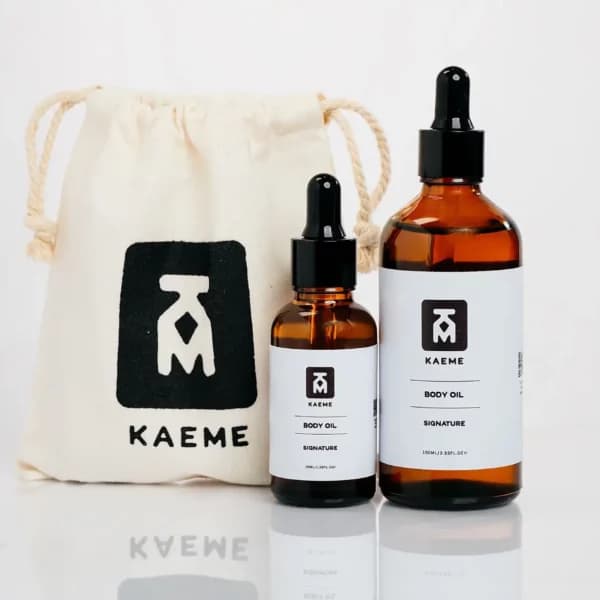
Kaeme is a Ghanaian beauty brand founded in 2016 by Freda Obeng-Ampofo. The women-owned brand is built around natural ingredients, plant-based beauty, local craftsmanship, and a strong connection to heritage. Handmade production plays an important role in Kaeme’s identity. Instead of presenting beauty as something detached from where it comes from, the brand keeps local production and craftsmanship visible, giving its products a stronger sense of origin. Ethical and fair-trade values add depth to that approach. They position Kaeme not simply as a natural beauty brand, but as one that also considers how ingredients and materials move through the supply chain. The brand sits within the mid-range beauty category, which allows it to feel more elevated than basic mass-market personal care while remaining more approachable than traditional luxury. Kaeme is particularly relevant for shoppers who value locally made beauty and products connected to African heritage. Its women-owned identity also gives customers another reason to support the brand beyond formulation alone. Overall, Kaeme combines natural and plant-based beauty, ethical and fair-trade sourcing, handmade production, locally made products, women-owned leadership, heritage, and mid-range pricing in a Ghanaian beauty brand that feels closely connected to both place and craftsmanship.

ORÍKÌ featured image

ORÍKÌ

Nigeria · Est. 2014 · Affordable

ORÍKÌ is a Nigerian beauty and wellness brand founded in 2014 by Joycee Awojoodu and based in Lagos. The Black-owned and women-owned brand draws on natural ingredients, plant-based beauty, heritage, and locally made production to create a distinctly African approach to self-care. Its formulation and sourcing values are a major part of the identity. ORÍKÌ is associated with vegan beauty as well as ethical and fair-trade practices, reflecting an emphasis on how ingredients are sourced and how production connects to local communities. Sustainability sits alongside these values, giving the brand a broader conscious-beauty profile. Its natural and plant-based positioning also helps create a strong connection between the products and the heritage traditions that inform the brand. Although the underlying price data places ORÍKÌ on the more accessible side, its presentation and subcategory positioning lean toward luxury beauty. That gives the brand an interesting balance: premium storytelling and heritage-led self-care without necessarily operating at the highest luxury price point. Overall, ORÍKÌ is a Nigerian beauty brand combining Black-owned and women-owned leadership, natural and plant-based formulas, vegan beauty, ethical and fair-trade sourcing, sustainability, locally made production, and heritage. It is particularly suited to shoppers who want beauty and wellness to feel connected to culture and responsible craftsmanship.

Can't find what you're looking for?

We add new sites every week but if you have a specific request, let us know.