List of 350+ Handcrafted Brands – Page 3

Brands 49–72 of 392. Back to page 1 · Browse brands A–Z

Brands

392 brands

HERMANOS KOUMORI featured image

HERMANOS KOUMORI

Mexico · Est. 2016 · Mid-range

Hermanos Koumori is a Mexican activewear and streetwear label, founded in Mexico City in 2016 by Alex León and Alex Sandler. The two friends started out in contemporary fashion and streetwear, aiming to build a brand from Mexico for the world. When they took up running and released a T-shirt reading "Post Running High", it went viral, and the brand gradually turned into a label designed for movement. The collection includes race singlets, training shorts and tights, long and short sleeve tees, hoodies, over shirts, caps and socks, made for people who run every week, not once a year. Every product is designed and tested in Mexico City, at 2,240 metres above sea level, and many pieces are made in part with recycled materials. The brand works directly with the adidas team in Herzogenaurach on collaborative product, from the H.Koumori Ultraboost 5 and Adizero EVO SL shoes to Adi365 apparel. Its stores, five in Mexico City and its metropolitan area and one in Guadalajara, are designed as spaces to experience the brand through architecture, music and materials. Hermanos Koumori has been featured by Harper's Bazaar and Believe in the Run.

Permanent Vacation featured image

Permanent Vacation

France · Est. 2017 · Mid-range

Permanent Vacation is an upcycled, gender-neutral designer clothing label, founded in New Delhi and Paris in 2017 by Caroline Piccot. After years in the refined world of Parisian luxury fashion, Piccot began making singular garments for friends, and the project found new purpose when she immersed herself in Indian handcraft. Its first pieces took shape during the monsoon in Goa in 2017, made from vintage saris, before the studio found its home in New Delhi. The label makes shirts, dresses, tops, skirts, jackets, trench coats, trousers and hats, often as unique pieces or limited editions not tied to gender. Everything is handmade in India in close collaboration with skilled artisans in small workshops with fair working conditions. Collections do not follow the fashion calendar but unfold as stories inspired by the fabrics found. Each piece begins with a journey through India to collect vintage cotton and silk saris, alongside khadi, ikat, linen and silk. The brand also uses deadstock fabric from factories and turns every leftover scrap into small accessories or patchwork, aiming for zero waste. Permanent Vacation has been featured by NZZ Bellevue, Platform Magazine, Blumenhaus and LBB Delhi.

Lorena Saravia featured image

Lorena Saravia

Mexico · Est. 2010 · Luxury

Lorena Saravia is a Mexican designer label for women, founded in Mexico City in 2010 by designer Lorena Saravia. Raised in a family of women who sewed, she studied fashion design at Felicidad Duce in Barcelona and worked with Bread and Butter Barcelona, G-Star RAW and Mexican designer Macario Jiménez before launching her own brand. It is inspired by strong-willed contemporary women and known for timeless, elegant and versatile silhouettes. The range covers clothing, footwear and accessories, with a focus on Western-inspired pieces in leather, suede and denim. Signature pieces include the Consuelo, Thea and Cayetana jackets, the Adela Vest, the Alex Denim Pants and the Saravia Cowboy boots, handcrafted by artisans in Veracruz. Collections are made in Mexico. The brand seeks out high-quality materials, develops zero-waste strategies and works with Mexican artisans to support local communities. Six months after launching, Lorena Saravia won Vogue's Who's Next México competition, and she was the only Mexican designer selected for Netflix's Next in Fashion. She has also presented at Mercedes-Benz Fashion Week Madrid. The brand has a store in Mexico City's Colonia Juárez.

BERNADETTE featured image

BERNADETTE

Belgium · Est. 2018 · Luxury

BERNADETTE is a Belgian luxury label for women, founded in Antwerp in 2018 by mother-daughter duo Bernadette and Charlotte de Geyter. Charlotte, the brand's creative director, launched it shortly after graduating from Antwerp's Royal Academy of Fine Arts. The brand embodies an intergenerational dialogue in which classic elegance meets modernity, and its refined vision of modern luxury sees fashion and interior design converge, with designs that speak to women who value individuality. BERNADETTE is celebrated for its signature hand-drawn botanical prints, bold use of colour and couture-inspired silhouettes. Its collections span ready-to-wear, accessories and homeware, including dresses such as the Lucky Dress, Dress Ross, Dress Isa, Dress Lena and the Eleonore Embroidered, along with coats, pants, knitwear, silk pyjamas, bags, and printed mugs and plates. The brand aims for a produced-in-Europe-only policy, making most garments with partners in Romania, Portugal and Bulgaria, and it uses a specialist atelier in India for embroidered pieces. Most of its textiles come from Italy, and it works towards zero-waste production by keeping stock low and upcycling fabric remnants. BERNADETTE is an independent, family-run label led by its founders, selling online and through stockists.

Jakett featured image

Jakett

USA · Est. 2008 · Luxury

Jakett is an American leather jacket label for women, founded in New York City in 2008 by designer Joseph Greco. It grew out of an obsessive search for the perfect completer piece: an effortless leather jacket that feels as natural as a second skin. The brand designs for a woman who is comfortable, confident and loves "classic cool", embracing the perfectly imperfect look of a distressed leather jacket. Jakett's jackets are produced unlined so the softness of the natural skins shines through, and the brand says they wear like a favourite sweatshirt. Styles include the Adriana Vintage Leather Jacket, the Alexa Burnished Leather Jacket, the Amelia Wrinkled Leather Jacket and the Vespa Vintage Leather Jacket. It also makes leather vests such as the Greta and a line called JKT NYC. Every jacket is handmade one at a time in Pakistan by generationally trained master leather workers using gentle, traditional tanning methods. Its skins are a byproduct of small family farms raising food for local communities, so the brand never uses animals killed for their skins. Jakett is independent and owned and run by Greco as founder and CEO.

Magnolia Pearl featured image

Magnolia Pearl

USA · Est. 2002 · Mid-range

Magnolia Pearl is an American designer, handmade luxury clothing label for women, founded in Fredericksburg in 2002 by Robin Brown. Brown, the brand's creator and designer, is said to speak in thread, her mother tongue. Magnolia Pearl began with a backpack she made from tapestry and kite string and sold to a stranger in a parking lot, and it has grown from her kitchen table into an international clothing brand with a romantic, bohemian look built on layered vintage textures. The range includes tees, tops, dresses, bloomers, denims, skirts, coveralls, jackets, kimonos and hoodies, plus hats, socks and adornments. Signature pieces include the Boyfriend Tee, the Viggo Tee, the Ada Lovelace Dress, Miner Denims, Kiki Bloomers, the Romeo Coveralls and the Appliqué Cyrene Coat. Clothing is made in the USA and India. Many pieces are hand-finished with appliqué, patchwork, embroidery and block prints, giving each garment a well-worn, one-of-a-kind character. Brown's memoir, Glitter Saints, tells her story and the brand's, with an audiobook narrated by actress Isabel May. Magnolia Pearl has stores in Fredericksburg, Texas, and Malibu, California, runs The Peace Warrior Foundation and has its own verified resale platform.

Rujuta Sheth featured image

Rujuta Sheth

USA · Est. 2015 · Mid-range

Rujuta Sheth is an American sustainable handmade clothing label for women, founded in New York in 2015 by Rujuta Sheth. Born in India, Sheth grew up surrounded by artisans, weavers, beaders and embroiderers, then studied at the Fashion Institute of Technology and worked with Donna Karan and Pamella Roland. After travelling through Gujarat and West Bengal to meet weavers, she launched her first capsule collection in January 2015, pairing traditional technique with modern, easy silhouettes inspired by the drape of the sari. The label makes colourful dresses, kaftans, wrap dresses, tops, pants and quilted jackets, including the Naya Kaftan Dress, the Nova Wrap Dress, the Heritage Jacket, Picnic tops and skirts and Rue pants, plus one-of-a-kind pieces. Every piece is designed in New York and handcrafted in India. Sheth uses almost entirely natural, organic and handwoven textiles, hand block printing in Jaipur and century-old techniques, and works with a fair-trade factory, creating jobs for skilled artisans. Rujuta Sheth was first picked up by Brooklyn boutiques such as Alter and Haus of Tova, and ELLE India named it a new fashion label to love in 2018.

Emerson Fry featured image

Emerson Fry

USA · Est. 2009 · Mid-range

Emerson Fry is an American designer label for women, founded in New York in 2009 by designer Emerson Fry and now based in Lee, New Hampshire. Fry's business began around 2009 selling flower brooches in New York. The brand believes in the beauty of the individual and sets out to create beautiful, strong, functional pieces that enhance enjoyment of life. The range covers tops, shirts, dresses, skirts, sweaters, denim, pants, jackets, coats and shoes. Pieces include the Sara Tier Dress, alpaca Emerson Sweaters, denim like the American Chino and Heritage Ankle, and coats such as the Car Coat and Wingtip Coat. Its sister collection, Love Tòmas, named for Fry's twin daughters, offers hand-block-printed tops, dresses, skirts and caftans, and there is also a Little Fry kids' line. The Emerson Fry line is designed, cut and sewn in the USA, mostly from fabrics milled in Italy, Japan and Poland, while Love Tòmas is block printed by hand in Rajasthan, India. The brand aims for zero waste through made-to-order pieces and limited runs, and it favours organic cotton, hemp, linen, Tencel and surplus fabric. Emerson Fry is independent and led by its founder.

Sejauh Mata Memandang featured image

Sejauh Mata Memandang

Indonesia · Est. 2014 · Mid-range

Sejauh Mata Memandang is a sustainable Indonesian textile and clothing label for women, men and kids, founded in Jakarta in 2014 by Chitra Subyakto. Subyakto began her career in 2001 as a stylist and writer at CosmoGirl! Indonesia and went on to design costumes for more than 25 films, winning Best Costume Design at the 2016 Indonesian Film Festival for Athirah. Her love of Indonesian textiles and culture led her to start the label. The brand makes kebaya, shirts, tops, dresses, wrap skirts, pants, outerwear, shawls and kain, plus bags, hair accessories, home decor and upcycled goods. Everything is made in Indonesia with local artisans using batik cap, hand-screen printing, handweaving and embroidery. Sejauh Mata Memandang follows the principles of circularity, designing each piece to be reusable, repairable, biodegradable and recyclable, and working with cotton, Tencel and recycled fabrics while upcycling leftover textiles. The label is a certified B Corporation and has collaborated with artists such as Eko Nugroho. To mark its tenth anniversary in 2024, it launched Studio Sejauh, a collaborative space connecting farmers, artisans, small businesses and communities to build Indonesia's textile sovereignty.

Studio 189 featured image

Studio 189

Ghana · Est. 2013 · Mid-range

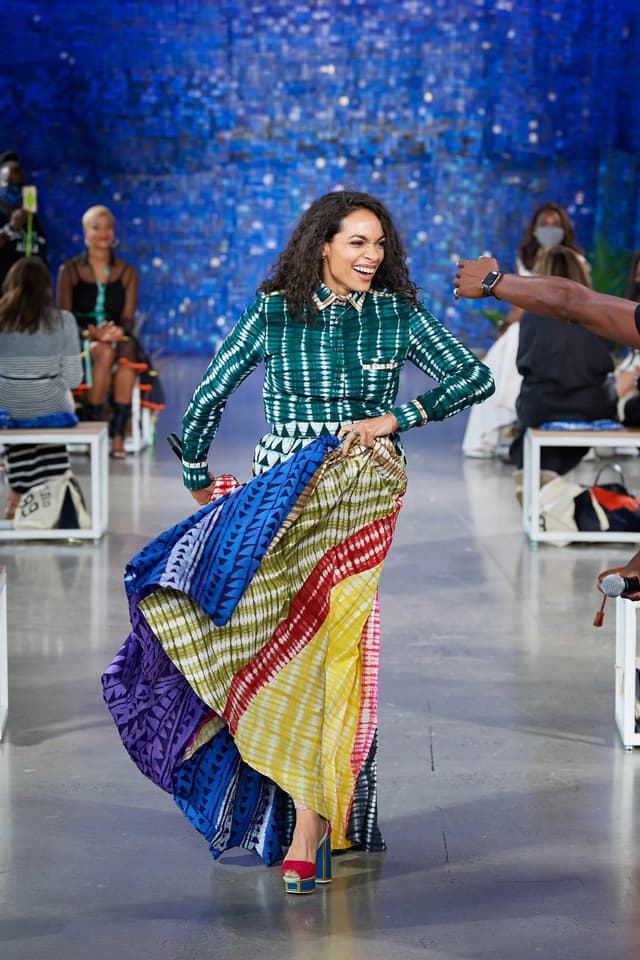
Studio 189 is an ethical, handmade designer label and social enterprise, founded in Accra in 2013 by actress Rosario Dawson and Abrima Erwiah. The artisan-produced fashion lifestyle brand creates African and African-inspired clothing, built on the belief that collaborating with artisanal communities can drive change: look good, feel good and do good. The range includes shirts, dresses, skirts, pants, coats, jackets, kimonos, swimwear and T-shirts, plus hats, baskets and home goods. Signature pieces include the Cotton Andy Pants, the Hand-Batik Cotton Jumpsuit, the Kente Single Breasted Coat and the Indigo Panel Long Skirt. Clothing is made mainly at its facility in Accra with artisan communities, using traditional techniques such as natural indigo dyeing, hand-batik and kente weaving, mostly in cotton. Studio 189 focuses on creating jobs and supporting education and skills training. The brand won the CFDA Lexus Fashion Initiative for Sustainability and has partnered with the UN ITC Ethical Fashion Initiative. It has collaborated with J.Crew, Fendi, Nike, EDUN, Opening Ceremony and Yoox Net-a-Porter, and its work featured in The Museum at FIT's Africa's Fashion Diaspora exhibition.

Our Own Pace featured image

Our Own Pace

India · Est. 2024 · Affordable

Our Own Pace is an Indian sustainable, handmade clothing label for men and women, founded in Delhi in 2024 by Shivani Boruah and Uday Shanker Acharya. The founders launched it as a conscious lifestyle brand that slows production down, pairing easy, useful everyday shapes with artisanal fabrics and traditional Indian techniques, and making clothing in small batches through careful manual processes. The gender-neutral range includes shirts, shorts, trousers, jeans, jackets, coats and dresses, plus a few home items. Signature pieces include the Type II Denim Jacket, the Abhinandan Chore Coat, the Sunday Morning Shirt and Shorts, the Crochet Shirt and the I'm A Star Horseshoe Jeans. Everything is made in India. The brand sources 100% cotton fabrics directly from weaving clusters in Kerala, Tamil Nadu, Bihar and West Bengal so that the makers are paid fairly, and works with handspun, handloom and ikat textiles. It also uses pre-consumer textile waste, and its fabrics carry traditional techniques such as block printing and natural dyeing. Our Own Pace sells online, offers made-to-order pieces and has been featured by Homegrown as a label making trend-led clothing for the conscious Indian shopper.

Dehen 1920 featured image

Dehen 1920

USA · Est. 1920 · Luxury

Dehen 1920 is an American luxury designer clothing label for men and women, founded in Portland in 1920 by William Peter Dehen. A German immigrant who had worked at Golden State Knitting in San Francisco and as night knitting manager at Jantzen Knitting Mills, Dehen set up Dehen Knitting Company to make varsity and collegiate sweaters. The family business kept knitting through the Depression, at one point running machines from the basement of the Dehen home. Over the decades the company added motorcycle riding sweaters, varsity jackets, car coats and cheerleading uniforms. Its own Dehen 1920 line, launched in 2011, includes N-1 Deck Jackets, Varsity and Flyer's Club Jackets, Crissman overshirts, moto sweaters and Heavy Duty tees. Everything is made in the company's own factory in Portland, Oregon. The brand is built on hand-crafted, heavyweight pieces in wool, waxed cotton and leather, designed to last for generations. Varsity jackets were historically made by hand to each athlete's specification, and the company has kept its manufacturing in the USA despite decades of pressure to move production overseas. Dehen 1920 remains a family-owned business and runs a retail store alongside its Portland factory.

Filip+Inna featured image

Filip+Inna

Philippines · Est. 2009 · Mid-range

Filip+Inna is a Filipino designer label, founded in Mandaluyong City in 2009 by fashion designer Lenora "Len" Cabili. Cabili grew up with the indigenous weaves and fabrics of the Philippines and knew their value early on. Rather than an eponymous line, she wanted a name that pointed back to the Philippines: "Filip" plus "Inna", for Filipina, with the plus sign signifying two things coming together. The range includes dresses, tops, button-down shirts, skirts, pants, vests and coats, plus scarves, sarongs and tote bags. Signature pieces include the Odie Dress, the Obi Opera Coat, the Luna Button Down, the Ceelie Skirt and the Ava T-Shirt. Each garment brings in ancient techniques of weaving, embroidery and beadwork from different indigenous groups of the Philippines, and many use handwoven and cotton fabrics. The label's mission is to revive and preserve traditions in danger of being lost, working with groups of artisans across the archipelago so they can keep practising their craft while improving their livelihoods. Filip+Inna remains independent and is led by its founder, celebrating what is distinctly Filipino.

Margn featured image

Margn

India · Est. 2020 · Mid-range

Margn is an Indian designer clothing label for men, founded in 2020 by NIFT graduates Ranjit Yadav and Saurabh Maurya and based in Noida. The brand focuses on craft, functionality and symbolism, exploring ideas of protection, preservation, shelter and humanity through clothing, objects and installations drawn from the founders' rural Indian upbringing. The collection merges functional workwear and knitwear with artisanal techniques, including shirts and overshirts such as the Synapse Shirt and Epidermis Overshirt, T-shirts, kurtas, trousers, co-ord sets, knitwear and outerwear like the Elbow Parka and Vertebrae Bomber Jacket. Everything is made in India. Its Craft x Functionality concept comes from a rural childhood in which a founder's mother made quilts and baskets by hand while his father worked with heavy construction machinery. Hand knitting and hand crochet are core to the brand, which works with organic cotton, silk, wool and upcycled textiles. Margn showed at London Fashion Week in 2022, was named a label to watch at Pitti Uomo by WWD and debuted at Lakmé Fashion Week's GenNext show in 2024. GQ India named it Indian breakthrough label of the year in 2024.

Rafael Kouto featured image

Rafael Kouto

Switzerland · Est. 2017 · Mid-range

Rafael Kouto is a Swiss upcycling and community couture label, founded in Losone, Switzerland, in 2017 by designer Rafael Kouto. Swiss with Togolese origins, he studied fashion design at FHNW-HGK in Basel, earned an MA in Fashion Matters from the Sandberg Instituut in Amsterdam, and worked at Alexander McQueen, Maison Martin Margiela, Carven and the Ethical Fashion Initiative. His gender-fluid garments have a visionary, hybrid aesthetic merging West African and Swiss culture. The label creates upcycled clothing and accessories and runs upcycling workshops with various institutions, with a particular focus on open source design and craftsmanship. Every piece is remade in Switzerland using local manufacturing and traditional, artisanal couture techniques. The brand works exclusively with pre- and post-consumer upcycling and sustainable fabrics, turning textile waste, deadstock, cotton, wool, denim and leather into new garments. Kouto won the Lotto Sport and Diesel International Talents Support Award in 2019 and the Swiss Design Awards in 2018, 2019 and 2023. The label has collaborated with Lotto Sport, Mode Suisse, the Zürich Silk Association and Bernina Switzerland, and has been featured in Vogue UK, Vogue Italia and Dazed.

Oge Ajibe featured image

Oge Ajibe

Canada · Est. 2018 · Affordable

Oge Ajibe is a Canadian designer label for women, founded in Vancouver in 2018 by Ogechukwu Ajibe. Ajibe moved from Ebonyi, Nigeria, to Vancouver in 2015. She had started making her own clothes as a way to build confidence, then wrote a fashion blog called Fashion Voice and worked as a fashion stylist. After completing a fashion program at LaSalle College, she launched her line under the Fashion Voice name in 2018 and rebranded it as Oge Ajibe on December 3, 2020. The label's mission is to help people feel comfortable and confident in how they present themselves, whatever their colour, body size or background. Its tailor-made tops, pants, dresses and accessories come in inclusive sizes from XS to 5X, with everyday pieces such as the Care Top, the Harmony Wrap Top, the Glory Pant, the Relief Pant and the Oversized Denim Dress. Every piece is handcrafted in Canada in small batches, using natural and sustainable fabrics such as cotton, organic cotton, linen, hemp and denim. The brand also sees part of its role as educating customers on how to present themselves through fashion. Oge Ajibe is independently owned and led by its founder.

Sindiso Khumalo featured image

Sindiso Khumalo

South Africa · Est. 2015 · Mid-range

Sindiso Khumalo is a South African sustainable designer label for women, founded in Cape Town in 2015 by designer Sindiso Khumalo. She first studied architecture at the University of Cape Town and worked in London for architect David Adjaye, then earned a Masters in Textile Futures at Central Saint Martins. Her unapologetically bold, bright and feminine clothing puts sustainability, craft and empowerment at its heart. The range includes embroidered T-shirts, skirts such as the Vicki Blue Embroidered Skirt, dresses like the Ayanda Gingham Check Dress and the Harper Anglaise Dress, jackets like the Luna Embroidery Jacket, and sets and suits. Accessories include Sindiso Khumalo x Ballo sunglasses. Khumalo designs every textile from her own drawings, watercolours and abstract cutouts, drawing on her Zulu and Ndebele heritage and the lands of KwaZulu-Natal. Clothing is made in South Africa, including in Woodstock, Cape Town, using cotton, linen, denim and wool. Khumalo was a joint winner of the LVMH Prize in 2020. She has shown at Milan Fashion Week, spoken on sustainable fashion at the United Nations, and exhibited at the Smithsonian National Museum of African Art and Zeitz MOCAA.

Kahindo featured image

Kahindo

USA · Est. 2017 · Mid-range

Kahindo is an ethical luxury womenswear label, founded in New York in 2017 by Kahindo Mateene. Mateene was born in Congo and raised across Africa, and her bold designs draw on that pan-African upbringing and her Congolese heritage. She became known internationally through Project Runway Season 12, and she built the label to prove that ethical production in Africa could make luxury garments. Kahindo makes dresses, jumpsuits, jackets, tops, blouses, trousers, rompers and coats, plus silk scarves and earrings, using African prints, organza and jacquard. Pieces include the Balloon Sleeve Ombré Organza Jumpsuit, the Bantu Dress, the Blue Jacquard Zola Pants and the Green Shimmer Bomber Jacket. Most pieces are made in Kenya by a women-led co-operative in Nairobi, with some made in Nigeria and the DRC. Artisans earn a living wage and receive named credit on every piece, and its ombré gradients are hand-dyed over up to two days per length. Kahindo has been stocked at Nordstrom, Bloomingdale's and Anthropologie and featured in Vogue, Elle, The New York Times and WWD. Mateene was a 2021 Tory Burch Fellow and is a graduate of The Workshop at Macy's.

INGA-LENA featured image

INGA-LENA

USA · Est. 2017 · Luxury

Inga-Lena is a European-inspired designer label for women, founded in New York in 2017 by Inga-Lena Rüttgers. The German-born designer is also the brand's creative director, and she creates minimalist, timeless ready-to-wear for everyday use. The label dresses the modern woman who stands her ground in her professional life without having to sacrifice her feminine elegance. Many pieces are made in silk, and the range includes blouses, camisoles, pants, skirts, dresses, knitwear and sleepwear. Pieces include the Fjord Silk Camisole, the Nina Top, the Bjorn Silk Pant, the Alēka Midi Skirt and the Ebba Dress, along with knitwear such as the Ava Cashmere Sweater and Dolly Cardigan, and sleepwear like the Dakota Silk Robe and Lotti PJ Set. The clothing is made in New York, and the team visits the factory daily during production to work with the sewers. Its cottons are made in the US. Inga-Lena is an independent label owned and run by Rüttgers, selling online and through stockists.

Kasih Co-op featured image

Kasih Co-op

USA · Est. 2012 · Affordable

Kasih Co-op is a sustainable, handmade American accessories and home label, founded in Manhattan Beach in 2012 by Ivana Darmawan. Darmawan grew up immersed in Indonesian culture before attending UCLA, and after college she followed her passion for traditional crafts and her desire to empower women artisans. Kasih means love or care in Indonesian, while Co-op refers to the collaborative groups of makers the woman-owned business works with. The range includes hand-dyed batik bandanas, scarves, head wraps, kimono robes, napkins and other textiles, all designed in the US and made in Indonesia. The brand began with batik jewellery and ikat poufs before evolving into hand-dyed textiles and wooden goods, with pieces made from natural, soft cotton. Each batik piece is crafted by hand using traditional wax-resist techniques, stamped with copper plates or drawn with a canting tool. Kasih Co-op supports 18 artisan partnerships across Java, Bali, Sulawesi and Jakarta, over 80% of them women-owned, and ensures every artisan is paid fairly. Darmawan was a participant in the Build a Nest Sustainability Artisan Accelerator, and one of the brand's batik bandanas appeared as a prop in Idina Menzel's Broadway musical Redwood.

11 11 featured image

11 11

India · Est. 2008 · Mid-range

11.11 is an Indian designer, sustainable handmade clothing label for men and women, founded in New Delhi in 2008 by Mia Morikawa and Shani Himanshu. The pair started it as the pret label of their design company, CellDSGN, with a handmade vision that departs from mainstream manufacturing. Its gender-neutral clothing is slow-made in small batches, working with groups of artisans across India. The range includes shirts, T-shirts, trousers, dresses, jackets, kimono coats, sweatshirts and jumpsuits, plus bandanas, quilts, rugs and towels. Signature pieces include the Macca Shirt, the Bandhani Shirt, the Ecru Cotton Denim Shirt, the Shibori Drape Dress, the Unisex Umini Jacket and the Denim Patchwork Trucker Jacket. Everything is made in India, through a fibre-to-finish process that comes together at its New Delhi workshop. The label is known for indigenous Kala cotton and 100% natural dyes, and it uses heritage techniques such as hand spinning, handloom weaving, hand painting, miniature tie-dyeing and quilting. Many of its rural artisans work from home, and after dyeing, the nitrogen-rich water and organic matter are used to fertilise local crops. Much of its value chain is led by women, and recent collections have explored the craft communities of Kachchh.

Happy French Gang featured image

Happy French Gang

USA · Est. 2013 · Mid-range

Happy French Gang is an American handmade clothing and home textiles label for women, founded in San Francisco in 2013 by Sandra Dejanovic. Dejanovic launched the brand in June 2013 with the aim of combining a French vision with California creation. Her motto for every new product is to focus on texture and colour, and she designs every piece herself and hand-paints its painted collection in the brand's Bayview studio. The label is best known for its jumpsuits, including tie-dye and numbered hand-painted styles, and for hand-painted uni-size dresses and tunics. The range also includes Marius pants, Zélia tops, Tilda skirts, hand-knit and alpaca sweaters and coats, along with home pieces such as Rayé throws, Sujani quilts, pillows and bags. Pieces are hand-painted in San Francisco, while woven cotton clothes, blankets and bags are made with artisans and cooperatives in Rajasthan, India, and wool and alpaca sweaters are made in Peru. The brand uses natural fibres, natural dyes where possible and small-batch production, and it reuses fabric scraps. Happy French Gang is independent and run by Dejanovic, selling online, by studio appointment and through stores and spas in the USA and Europe.

Chereshnivska featured image

Chereshnivska

Ukraine · Est. 2016 · Mid-range

Chereshnivska is a Ukrainian unisex designer label, founded in Lviv in 2016 and led creatively by designer Anastasiya Rozava. Rozava joined the team that year after winning Lviv Fashion Week's Sabotage competition, and the brand is run alongside co-founder and CEO Iryna Kokhana. Focused on innovation and sustainability, it creates art-driven clothing that reflects the modern world, with every collection built on a strong core idea. The range includes shirts like the Art Brut Shirt, tops, printed sweatshirts, dresses, trousers, upcycled jeans, skirts and shorts, plus jackets such as the Upcycled Jeans Jacket, the Upcycled Jeans Trench and the Hand Woven Unisex Jacket. Most pieces feature unique hand-drawn prints by Rozava. Clothing is made in Ukraine in very limited quantities. The label rescues forgotten denim and handcrafts it into new pieces, and set a goal of making half of its production from recycled items, alongside new fabrics such as wool and silk. Chereshnivska has shown at Lviv Fashion Week and Ukrainian Fashion Week and has been listed among London Fashion Week designers. It remains an independent label.

KikoRomeo featured image

KikoRomeo

Kenya · Est. 1996 · Luxury

KikoRomeo is a Kenyan designer label, founded in Nairobi in 1996 by designer Ann McCreath. Born in Scotland, McCreath studied fashion in Rome and worked as a designer in Barcelona before aid work in Kenya led her to choose trade over aid. Named after the Swahili for "Adam's apple", the label creates sustainable, often unisex clothing that transcends cultures and trends and is designed for longevity. The range includes jumpsuits such as the Bumi, Maridadi and Samawati Jumpsuits, overalls like the Blinky Overalls, workman jackets and hand-painted coats. Some coats are hand-painted by Sudanese fine artist Eltayeb Dawelbait and made from cotton industrial waste. KikoRomeo is made in Kenya with handmade and hand-dyed fabrics and hand-carved trims sourced from the African continent, mainly in cotton, silk and linen. Fair trade since it began, it was set up to create jobs in rural areas, working with community artisans and women's groups. McCreath also founded the Festival of African Fashion and Arts (FAFA) in 2008. The independent label has shown across Africa, Europe and the USA, including at Mercedes-Benz Fashion Week in Johannesburg.

Can't find what you're looking for?

We add new sites every week but if you have a specific request, let us know.