Black-Owned Beauty Brands

Finding independent beauty labels founded and owned by Black entrepreneurs should be straightforward. This page brings together Black-owned beauty brands across skincare, makeup, grooming and personal care. Many were created in response to gaps their founders experienced firsthand, from limited complexion shades to products that overlooked melanin-rich skin. Each profile covers the founder, brand background, product focus, price range and the ideas that shaped the business.

Brands

Beneath Your Mask featured image

Beneath Your Mask

United States · Est. 2016 · Luxury

Beneath Your Mask is a luxury American clean beauty brand founded by Dana Jackson, and its origin is medical rather than commercial. In 2011 she was diagnosed with systemic lupus erythematosus and lupus nephritis, and relocated to Los Angeles for treatment. The products available to her were either too harsh for a compromised immune system or too weak to help. She created the first, Heal: Whipped Skin Soufflé, in 2012. The name refers to the figurative masks people wear. The brand's line is that beneath that mask lies a beauty which does not need society's approval to exist. Products are formulated in Los Angeles using mostly certified organic, organic or wild-harvested botanicals, handcrafted rather than mass produced. Formulations exclude parabens, sulfates, harsh detergents, phthalates, synthetic fillers, artificial colours, artificial fragrances and artificial preservatives. Most products are vegan, with the Illuminate mask containing honey and the Remedy lip balm containing beeswax, and the brand names both exceptions openly. Everything is packaged in Miron violet glass, which filters damaging light wavelengths and protects potency without synthetic preservatives. Hero products include Heal: Whipped Skin Soufflé and the Illuminate Clarifying Face Mask. Nourish Skin & Hair Serum, Polish Detoxifying Body Scrub and the Remedy Conditioning Lip Balm complete the line. A quarterly giving programme supports minority women living with lupus and other autoimmune conditions, covering groceries, supplements, bodywork and household help. For anyone researching luxury clean beauty, natural beauty or skincare for autoimmune and highly reactive skin, this brand is exceptional. Few founders understand reactive skin from the inside as well as this one does.

Pholk Beauty featured image

Pholk Beauty

United States · Est. 2018 · Mid-range

Pholk Beauty is an American skincare brand founded by Niambi Cacchioli in Union City, New Jersey, and its FAQ states clearly that Pholk is Black woman owned and operated. The brand calls its products soul food for the skin, and the phrase is literal rather than decorative. Formulations are built on heirloom superfoods of the African Diaspora and the American South. The brand's stated interest is supporting healthy melanin function for all skin types, using what it calls sun-adaptive superfoods. Ingredients carry named origins, which is rare at this price. Cold-pressed hibiscus oil comes from Senegal, moringa from Ghana, Kalahari watermelon seed oil from South Africa, white frankincense from Somalia and hemp seed oil from Kentucky, alongside chaga phyto-melanin and okra seed oil. Sourcing is treated as the substance of the brand rather than a footnote. Pholk buys from Black American farmers including Nebedaye Farms in North Carolina and Tall Grass Food Box, and has committed to investing in processing equipment for those farm partners, including a herbal still. The founder describes going to farms with an open mind and co-creating the key ingredient list with the growers themselves. Hero products include The FlexNectar Complexion Oil, The NightNectar, the Glow Replenish Face Wash and the GoldenBod Barrier Balm with chaga phyto-melanin. Prices run from $20 to $45. For anyone researching Black-owned beauty, natural beauty, affordable beauty or skincare with a genuinely traceable agricultural supply chain, Pholk Beauty is one of the most thoughtful independents in America. Every ingredient can be traced back to a named farm.

Scotch Porter featured image

Scotch Porter

United States · Est. 2015 · Mid-range

Scotch Porter is an American men's grooming brand founded in 2015 by Calvin Quallis, and its blog states plainly that it is a Black-owned men's grooming brand. The origin sits in barbershops, first his mother's and later his own experience of a category that offered men either cheap products full of filler or expensive ones with no substance. Scotch Porter closed that gap. The line covers beard, hair, skin and body. It is built on more than twenty-six active ingredients, including biotin liposomes, burdock root, nettle leaf, kale protein, aloe and shea. Most core products stay between $14 and $20. The ingredient philosophy is refreshingly unideological: not all natural ingredients are safe, and not all synthetic ingredients are unsafe. What the brand does exclude is specific and published, covering parabens, sulfates, petroleum and mineral oil, talc, BHA, formaldehyde, silicones, BPA and PFAs, polyethylene and microbeads, toluene, triclosan, carbon black and phthalates. No animal ingredients are used and products are not tested on animals. Hero products include the Beard Oil, Beard Balm, Leave-In Beard Conditioner, Curls & Waves Hair Balm and the Curls & Waves Hair Shampoo. The Social Impact Fund directs a share of sales into education and job training, entrepreneurship and reducing recidivism, working with America on Tech, Manifest Works and Make USA. For anyone researching Black-owned beauty, American beauty, affordable beauty or men's grooming that takes textured hair and beard care seriously, Scotch Porter set the modern standard. It made a category that once ignored Black men take them seriously.

Buttah Skin featured image

Buttah Skin

United States · Est. 2018 · Mid-range

Buttah Skin was founded in 2018 by Dorion Renaud, who grew up in Beaumont, Texas, and built the brand around a problem the industry had ignored: skincare designed specifically for melanin-rich skin. The brand describes itself as proudly Black-founded and led by a team of women, and it markets itself plainly as the best skincare for women of colour. The clinical case behind that positioning is sound. Deeper skin tones are more prone to post-inflammatory hyperpigmentation, and aggressive treatment often makes dark marks worse rather than better, so the formulations aim for results without provoking a reaction. Products are made in the USA, and the Facial Shea Butter uses 100% pure organic virgin shea butter sourced from Ghana. The CocoShea blend of African butters runs through the range. The hero is the Anti-Dark Spot 15% Vitamin C Serum, built with L-ascorbic acid, ferulic acid, turmeric root and green tea. It sits alongside the 0.5% Everlasting Retinol Oil, the CocoShea Revitalizing Cream Moisturizer and the Gentle Cleanser. The Invisible Tinted Mineral Facial Sunscreen SPF 30 is formulated to avoid a white cast. A published four-week third-party clinical study covered thirty-six participants aged thirty to fifty-five, all Fitzpatrick IV to VI. It reported 100% showing marked improvement in brightness, over 80% with significant improvement in evenness, and 90% reporting dark spot improvement. The brand is cruelty-free. Prices run from $10 to $49. For anyone researching Black-founded beauty, American beauty, affordable beauty or hyperpigmentation care for deeper skin, Buttah Skin is essential reading.

Hyper Skin featured image

Hyper Skin

United States · Est. 2019 · Mid-range

Hyper Skin is an American skincare brand founded by Desiree Verdejo, who previously ran the Harlem beauty store Vivrant Beauty. Widely covered in the beauty press as a Black-owned brand, it was built to answer a gap the industry had ignored for decades. Most brightening and dark spot products were developed and tested on light skin, then sold to everyone. Deeper skin tones are more prone to hyperpigmentation and also more likely to react badly to aggressive treatment, which is a difficult formulation problem. Hyper Skin set out to solve exactly that. The brand describes itself as clinical skincare rooted in diversity and joy, developed for all skin types and tones through the lens of skin of colour. Formulas are hyper-balanced, meaning gentle enough for deeper and sensitive skin, yet strong enough to work. The range is small and focused. Hyper Even Brightening Dark Spot Vitamin C Serum is the award-winning hero, built with vitamin C, turmeric and kojic acid. It sits alongside the Hyper Even Fade and Glow AHA Mask, the Gentle Brightening Cleansing Gel and Hyper Daily Invisible for All SPF 50 Sun Drops, a sunscreen made to leave no white cast. The brand is vegan and does not test on animals, testing instead on people across a wide range of skin tones. Parabens, sulfates and phthalates are avoided. Prices run from $28 to $48. For American beauty, affordable beauty, vegan beauty or hyperpigmentation care that actually accounts for deeper skin, Hyper Skin matters. The range is short by design. Every product has a clear job.

ROSEN Skincare featured image

ROSEN Skincare

United States · Est. 2017 · Affordable

Rosen Skincare is an American acne care brand built by someone who could not find a solution that worked for her own skin. Founder Jamika created it after years of searching, and the brand states its ownership directly on its product pages: Black-owned, woman-owned, made in the USA. That plainness runs through everything it does. The proposition is authentic acne care, research-backed and made for real skin. Rosen blends clinical performance with natural ingredients in what it describes as clean, culturally rooted formulas, and its range of cleansers, treatments, masks and moisturisers is built around ingredients that address breakouts without stripping the skin. The brand explicitly focuses on melanated skin, formulating for the post-inflammatory hyperpigmentation that follows acne on deeper skin tones, a problem the mainstream acne market has consistently under-served despite it being the most common complaint among the people it affects. That focus, rather than any single ingredient, is what makes Rosen genuinely useful. The brand's ambition is stated as creating the next generation of mass acne care, which means accessibility rather than exclusivity, and products are priced in the affordable tier so that consistent daily use is realistic rather than rationed. Everything is made in the United States. For shoppers searching for affordable, clean, natural American skincare from a women-owned and Black-owned business with genuine research behind it and formulations designed specifically for melanated skin and everyday acne management, Rosen Skincare is one of the most purposeful independent brands currently working in the category.

The Lip Bar featured image

The Lip Bar

United States · Est. 2012 · Affordable

The Lip Bar is one of the most significant Black-owned beauty businesses in America, and its origin story has become genuinely well known. Founder and CEO Melissa Butler, a Wall Street expat and self-described Shark Tank reject, began making lipstick in her Brooklyn kitchen in 2012 because the shades she wanted did not exist. Today the brand is headquartered in Detroit with its own flagship store and is stocked in Target nationwide. The brand states its ownership plainly on its own site: Black Woman Owned, founded and owned by Women of Color, and the number one independent Black-owned beauty brand among all multicultural colour cosmetics. That is not marketing applied afterwards, it is the reason the company exists. The range spans lips, complexion, eyes and curated Fast Face routine kits, built on the principle of maximum impact with minimal effort. Products are one hundred percent vegan and cruelty-free, formulated with a blend of natural ingredients including shea butter, avocado oil, coconut oil and vitamin E. The brand is careful about what it does not claim, stating openly that its products are not certified organic. All products except one palette are talc-free, no product contains fragrance, and the positioning is unapologetically non-toxic beauty essentials for non-toxic people. Priced in the affordable tier, the brand keeps genuinely pigmented colour accessible. For shoppers searching for affordable, vegan, natural, cruelty-free American beauty from a women-owned and Black-owned business built for a full spectrum of skin tones, The Lip Bar is a landmark.

Fashion Fair featured image

Fashion Fair

United States · Est. 1973 · Mid-range

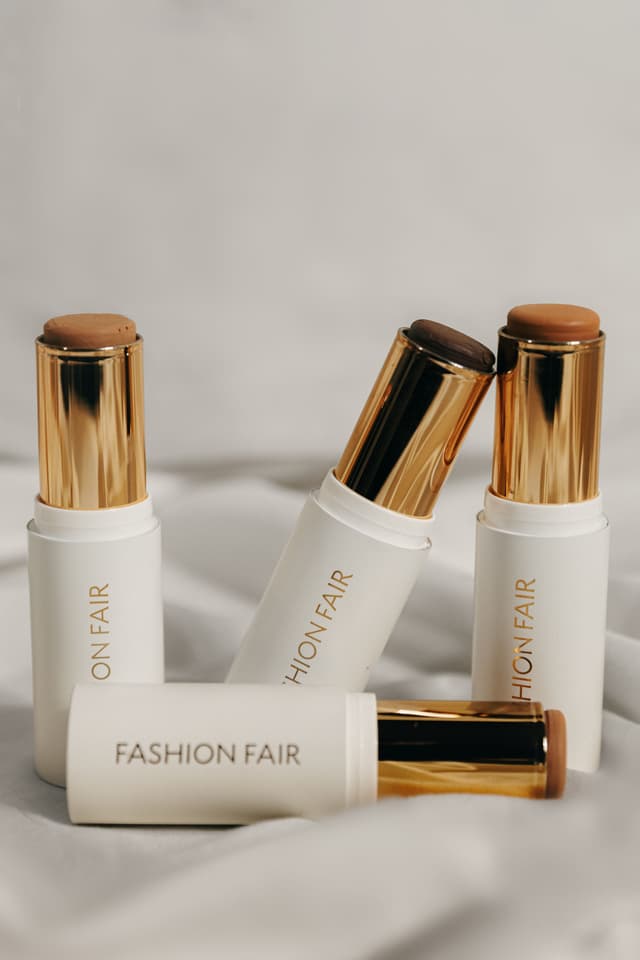
Fashion Fair is a landmark in American beauty and one of the most historically significant Black-owned cosmetics brands ever created. Founded in 1973 by Eunice Johnson of Johnson Publishing, the company behind Ebony, it was the first international prestige cosmetics brand developed for deeper skin tones, sold in stores from Neiman Marcus to Printemps at a time when no major house served those customers at all. That history is the brand's foundation, not its whole story. After acquisition and relaunch, Fashion Fair is once again Black-owned and led by Black women executives, both formerly of Johnson Publishing, continuing a lineage rather than borrowing one. Its return has been widely covered in the American press as a rare example of a heritage Black-owned brand returning to Black ownership. The brand describes itself as celebrating diversity, pioneering beauty and elevating deeper skin tones since 1973, and marks fifty years of Black beauty. The modern range focuses on complexion, built around the unique undertones of deeper hues, with iconic formulas reworked using natural ingredients hand-picked by a product development team working alongside renowned dermatologist Dr Caroline Robinson and celebrity makeup artist Sam Fine. All products are cruelty-free and vegan. Priced in the mid-range tier, Fashion Fair sits where it always has: prestige quality at a price its community can actually access. For shoppers searching for vegan, cruelty-free, women-owned and Black-owned American beauty with genuine heritage behind the claim, Fashion Fair remains without equivalent.

Can't find what you're looking for?

We add new sites every week but if you have a specific request, let us know.

About black-owned beauty brands

Black-owned beauty brands are defined by ownership, rather than by one product style or customer group. The labels featured here work across skincare, makeup, grooming and personal care, with each founder bringing a different experience and point of view to the market.

Some Black-owned skincare brands focus on concerns that can present differently on melanin-rich skin, including hyperpigmentation, uneven tone and visible irritation. Others create broader routines covering cleansing, hydration, treatment and body care.

Black-owned makeup brands may address shade depth, undertones and colour payoff across a wider range of complexions. Their collections can span foundation, concealer, lip colour, blush and eye makeup.

Ownership details matter because they show who built the business and who continues to guide its decisions. Every listing on this page leads to a full profile covering the founders, origins, price positioning and main products. Together, these profiles provide a clearer view of the independent Black entrepreneurs working across today’s beauty industry.

Frequently asked questions

What does Black-owned beauty brand mean?
A Black-owned beauty brand is a company in which a Black founder, entrepreneur or ownership group holds a meaningful ownership stake and role in directing the business.
Is Black-founded the same as Black-owned?
Black-founded identifies who originally established the company. Black-owned describes its current ownership. A brand can be both Black-founded and Black-owned, while later investment or acquisition may change the ownership structure.
What do Black-owned skincare brands offer?
Black-owned skincare brands cover cleansing, hydration, sun care, body care and targeted treatments. Some specialise in concerns such as hyperpigmentation and uneven tone, while others create products for a broad range of skin types.
What makes Black-owned makeup brands important to beauty?
Many Black-owned makeup brands have expanded expectations around foundation depth, undertones and pigment performance. Their founders often bring direct experience of the limitations historically found within complexion and colour cosmetics.
Are products from Black-owned brands only for Black consumers?
These brands create products for customers across different skin tones, types and backgrounds. Ownership describes who controls the business rather than limiting who can use its products.
Why is the distinction between ownership and representation important?
A campaign may feature Black models or creators without the company being Black-owned. Ownership identifies who holds equity, makes business decisions and benefits directly from the company’s growth.
How does From The Labels confirm that a brand is Black-owned?
From The Labels editors review founder biographies, official company information, interviews and ownership announcements before assigning a label to this category.
Are all the brands on this page independent?
Yes. Every company displayed here is an independent beauty label, and each profile introduces the founders and story behind the business.
Can a Black-owned brand appear in other beauty categories?
Yes. A label may also appear in categories such as women-owned, vegan, cruelty-free, sustainable, affordable, luxury or everyday beauty when those attributes apply.