Formal Shoes

Discover our list of independent formal shoe brands creating Oxfords, Derbies, loafers, monk straps, pumps and other polished styles for work, weddings and evening events. The collection brings together traditional shoemakers and contemporary labels across different materials, constructions and price ranges. Browse good formal shoe brands by style, sizing, production location and available finishes. Those comparing men’s dress shoe brands can also look beyond the logo to the last shape, leather, lining and sole. Each profile introduces the maker and its current range, with a route to official sizing, availability, delivery and purchasing information before choosing a pair online.

Brands

Caulaincourt featured image

Caulaincourt

France · Est. 2008 · Mid-range

Alexis Lafont launched Caulaincourt in Paris in 2008 with a small collection of men’s dress shoes. The house has expanded into loafers, boots, slippers and sneakers, but its best-known feature remains the hand-applied patina: customers can choose a nuanced colour finish rather than being limited to a standard shade. Caulaincourt also offers made-to-order variations for more extensive personalisation. The shoes are made through specialist workshops in several European countries, including France, Italy and Spain; the place of manufacture depends on the model. Caulaincourt uses different construction methods for different shoes, from refined dress styles to more robust boots. Its services include resoling and recolouring, and it offers resoling for its B.A.N.D.I.T sneakers. The brand sells online and through Paris boutiques, including its Rue de Courcelles location. Fit can change between Caulaincourt models, so the house provides a model-based size guide rather than treating one size as universal across its collection.

Pied de Biche featured image

Pied de Biche

France · Est. 2015 · Mid-range

Friends Jérôme Maître and Matthieu Bourgeaux launched Pied de Biche in France in 2015. Its first product was a Chelsea boot funded through a crowdfunding campaign; the brand has since grown into a broad leather footwear range for women and men. Women’s styles include ankle boots, loafers, derbies, ballet flats, sandals and sneakers, while the men’s collection covers boots, dress shoes, boat shoes and sneakers. Pied de Biche develops its collections in La Rochelle and works with shoemaking workshops in Portugal’s Porto region. It says most of its leather comes from northern Italy. The designs revisit familiar shoes through colour, material and small changes in detail, keeping the original Chelsea boot central to the range. Customers can buy through the brand’s online shop and its French stores. The label opened its first Paris store in 2017 and subsequently expanded its retail presence. Its product pages provide the fit information for each model, which matters across a collection containing both structured leather boots and softer casual shoes.

No Skin featured image

No Skin

Australia · Est. 2020 · Mid-range

Nōskin is a Melbourne footwear and clothing label founded by Tony Corrales, Jai Long and Ash Pierce. Developed around vegan wardrobe staples, it pairs an interest in music and street style with familiar shoe shapes: Chelsea and combat boots, derbies, loafers and sneakers. Its clothing extends that approach into pieces intended to be worn together. Nōskin footwear is designed in Melbourne and handcrafted in Franca, Brazil, at an all-vegan factory. The brand says its shoes contain no animal-derived materials or glues. A Rose Loafer listing, for example, specifies a Spanish-milled microfiber polyurethane upper, rubber sole and microfiber lining, making clear what “vegan leather” means for that pair. Many of its boot and loafer designs use substantial lug soles. The brand sells online and has a studio store in Collingwood. It offers international shipping and a footwear repair service for customers in Australia, including resoling and cleaning. Sizes and fit differ by style; the Rose Loafer listing spans EU 37–47 and describes that model as true to size.

Mariano Shoes featured image

Mariano Shoes

Portugal · Est. 1945 · Mid-range

Mariano Shoes began in 1945 when shoemaker Mariano de Jesus Gomes started producing footwear under the Mariano name in São João da Madeira, Portugal. The company now operates in nearby Oliveira de Azeméis and continues to describe its shoes as handmade, from the first leather cut through the final polish. Its current shop covers men’s and women’s footwear, including loafers, sneakers, boots and more formal shoes. Some men’s designs have special-size options, which are worth checking if a standard size range has been limiting. The brand sells directly online and provides product-specific size and availability information for its different collections. Mariano says its footwear can be restored, extending the useful life of a pair. It also reports using recycled-material packaging. Those are more specific points to consider than a general sustainability label, while the materials and construction of a particular shoe should be checked on its listing.

Mukishoes featured image

Mukishoes

Portugal · Est. 2018 · Mid-range

Mukishoes is a Portuguese barefoot footwear brand conceived in 2018 by founders and designers Madlen Schering and Marta Caeiro. They set out to make minimalist shoes from natural materials, with a shape that gives the foot room to move. The brand added Mukishoes Kids in 2020 and now sells styles for adults and children. Its barefoot design has a wide toe box, a thin flexible sole and no height difference between heel and toe. The range includes sneakers and boots, with materials varying by model. Mukishoes says its shoes are handcrafted in small, family-owned factories in northern Portugal. Its material choices are part of the brand’s environmental approach, but shoppers should check each product page for the exact composition of a pair. Mukishoes sells through its official online shop and provides separate size finders for grown-ups, kids and its smallest sizes. Its sizing guidance notes that different materials can behave differently on the foot. For someone new to barefoot shoes, measuring foot length and allowing room at the toes is more useful than assuming their usual shoe size will transfer directly.

Hirundo featured image

Hirundo

Portugal · Est. 2021 · Mid-range

Hirundo is a Portuguese footwear brand started in 2021 by brothers Filipe and Eduardo Serzedelo. Inspired partly by their father’s long-kept shoes, they set out to make sneakers with a longer useful life and a close connection to Portuguese suppliers. The brand says its shoes are designed, sourced and crafted in Portugal. Sneakers are Hirundo’s main focus, with different colours and shapes across its collections; the shop also lists styles such as chukka boots and mules. Hirundo describes its use of local and recycled materials on its website, but the material mix varies by product and is worth checking on the individual listing. Its manufacturing partners are close to its stores, allowing the brand to work within a relatively local supply chain. Hirundo’s operating company, Sanjoanina Fábrica de Calçado, is listed as a Certified B Corporation. Customers can order on the official website or use its store directory to find a location in Portugal, including Porto and Lisbon. Check the product page for sizing and construction details before choosing a pair.

Diverge Sneakers featured image

Diverge Sneakers

Portugal · Est. 2018 · Mid-range

DiVERGE is a Portuguese footwear brand founded in 2018. Customization is central to its sneakers: customers can use the website to start with a base design or adapt one of the brand’s suggested combinations, choosing a look before the pair is made. DiVERGE says its sneakers are handcrafted to order in Portugal. Its current site highlights leather from LWG Gold-rated suppliers and OEKO-TEX-certified materials, though the composition should still be checked for each design. Making pairs after they are ordered is part of its approach to limiting overproduction. The company is also listed by B Lab as a Certified B Corporation. The official shop is the place to design and order a pair, with product pages explaining the customization choices, sizing and expected production period. DiVERGE also runs iMAGINE, a programme intended to help young people facing social exclusion build employment and entrepreneurship skills. These are specific parts of the brand’s work for shoppers assessing its environmental and social claims.

Luís Onofre featured image

Luís Onofre

Portugal · Est. 1999 · Luxury

Luís Onofre is a Portuguese footwear and leather accessories brand created by designer Luís Onofre in 1999. He entered a family business with a much longer shoemaking history: his grandfather founded a factory in Oliveira de Azeméis in 1933. The designer’s own label grew from that background and presented its first collection under his name in 1999. The brand is especially associated with women’s dress shoes, including heels, sandals and boots, although its online shop also carries men’s footwear and leather goods. Luís Onofre describes its work in terms of detailed design, skilled making and material quality. Its footwear is produced in Portugal, with the family’s manufacturing base in Oliveira de Azeméis. Customers can explore current collections and order through the official website, which also provides information about Portuguese store locations. For a particular design, check the product listing for its material, heel height and size options. The 1999 date refers to the Luís Onofre brand; the family shoemaking business predates it by several decades.

Josepht featured image

Josepht

South Korea · Est. 2018 · Mid-range

Josepht, also styled JosephT, is a leather footwear brand that says it was born in Seoul in 2018. Jaechan Seol is closely associated with the business and writes about its history on the official site. Its selection centres on men’s shoes and boots, including loafers, derbies, Chelsea boots and more casual designs. The brand aims for familiar styles that can be worn often. Depending on the model, its shoes may use cushioned OrthoLite insoles, Vibram outsoles or welted construction; these details should be checked on the individual listing. Josepht says its products are made by skilled artisans at manufacturing facilities in Seoul, South Korea. There is a location distinction for shoppers: Josepht’s website describes its online retailer as based in Canada, while orders ship internationally from South Korea. The site sells directly and includes a sizing guide on each product page. Josepht recommends contacting its team for sizing help, especially for its Goodyear-welted collections, whose size exchanges are restricted. Its FAQ also distinguishes water-resistant leather footwear from waterproof shoes.

G

Guild Tokyo

Japan · Est. 1996 · Mid-range

Guild of Crafts is a Japanese shoemaking house founded in 1996 by Chihiro Yamaguchi. Yamaguchi began making shoes in Kyoto in 1980 and later studied shoemaking in England. He established Guild of Crafts at a time when bespoke shoes were still unfamiliar to many customers in Japan, developing the house’s own methods for measuring feet and making lasts. Guild offers bespoke, made-to-order and ready-to-wear footwear. Bespoke begins with the customer’s measurements and a dedicated last, followed by fittings. Made-to-order uses an established Guild last, while ready-to-wear provides a finished-shoe option. Its model lists include Oxfords, buckle shoes and boots, with designs for both men and women. Availability depends on the ordering route and model. The official website explains the different lines and accepts appointment enquiries for orders, maintenance and repairs. Guild is a useful brand to consider when comparing Japanese bespoke shoemakers because customers can see how its approach to fit carries across three ways of buying a shoe.

Marquess Shoemaker featured image

Marquess Shoemaker

Japan · Est. 2011 · Luxury

Marquess is a bespoke shoemaking atelier established in Tokyo in 2011 by Shoji Kawaguchi. His interest in British footwear took him to Northampton, where he studied shoemaking, and later to training with bespoke maker Paul Wilson. Kawaguchi returned to Japan in 2008 and opened Marquess three years later. The atelier moved to Ginza in 2017. Marquess is known for understated leather shoes whose shape, fit and finishing receive close attention. A bespoke order starts with a meeting and foot measurements. The team makes a wooden last for the client, tests the fit with a trial shoe and adjusts the last before making the final pair by hand. The website shows Oxfords, derbies and other designs for men, as well as examples of women’s shoes. The atelier also offers made-to-order styles, where customers choose from existing models and select details such as leather and sole type. Bespoke enquiries require an appointment. Marquess is most relevant to shoppers seeking a personal fitting process and classic shoes they intend to maintain and wear for years.

Spigola featured image

Spigola

Japan · Est. 2001 · Luxury

Spigola is a bespoke shoemaking brand established in Kobe, Japan, in 2001 by Koji Suzuki. Born in Kobe, Suzuki travelled to Italy in 1997 and trained in Florence under shoemaker Roberto Ugolini. After three years of study, he returned home and began making bespoke shoes from space in his father’s workshop in Kobe’s Nagata district. Bespoke footwear remains central to Spigola. Its website also presents a prêt-à-porter collection described as pattern-order footwear, and Suzuki’s official biography dates the launch of that line to 2011. The distinction matters for shoppers: commissioning a bespoke pair and ordering from an established pattern are different ways to access the maker’s designs. Spigola’s atelier is in Hosoda-cho, Kobe, with weekend visits requiring a reservation. The brand’s identity brings together Suzuki’s Italian shoemaking training and his work in a Japanese footwear-producing city. Anyone considering an order should contact the atelier about the available styles, fitting process and appointment arrangements before travelling.

Hiro Yanagimachi featured image

Hiro Yanagimachi

Japan · Est. 1999 · Luxury

Hiro Yanagimachi is a bespoke shoemaking workshop in Tokyo, founded in 1999 by Hiroyuki Yanagimachi. After studying industrial design, Yanagimachi went to England to learn shoemaking at London Cordwainers College and gain experience with bespoke techniques. He began his own brand on returning to Japan and later developed a workshop team. Customers can choose among made-to-order, made-to-measure and bespoke shoes. The distinction is how the last—the form used to build the shoe—is prepared. Made-to-order uses one of the workshop’s established lasts; made-to-measure adjusts a base last; bespoke starts with a last made for the individual customer and includes trial fittings. The workshop offers lace-up shoes, loafers and other styles, with design choices depending on the order method. Visits to its Sendagaya workshop are by appointment. Customers can discuss fit with the people making their shoes, and the brand says enquiries and appointments can be handled in English. That makes its ordering process particularly relevant to international shoppers considering Japanese bespoke footwear.

Yohei Fukuda featured image

Yohei Fukuda

Japan · Est. 2008 · Luxury

Yohei Fukuda is a Tokyo shoemaker founded in 2008 by its namesake. Fukuda learned shoemaking in England, including training in Northamptonshire and work with London firms, before returning to Japan to establish his workshop. He oversees the design, last making and shoemaking alongside a small team of craftspeople. The business offers several ways to buy its classic men’s shoes: ready-to-wear, made-to-order, house-style bespoke and fully bespoke. Its ready-to-wear shoes draw on the workshop’s bespoke methods and are hand lasted and hand welted. Fit remains central to the offer; the online store lists several width options and provides a size guide, while made-to-order enquiries and appointments can be arranged through the Tokyo store. Fukuda is especially relevant to someone comparing Japanese bespoke shoemakers with British-influenced dress-shoe styling. The different order routes matter: a customer choosing an existing size is buying a different fitting experience from someone commissioning a pair around a personalised last. The official sites explain those options before an appointment or purchase.

Beatnik Shoes featured image

Beatnik Shoes

Spain · Est. 2014 · Mid-range

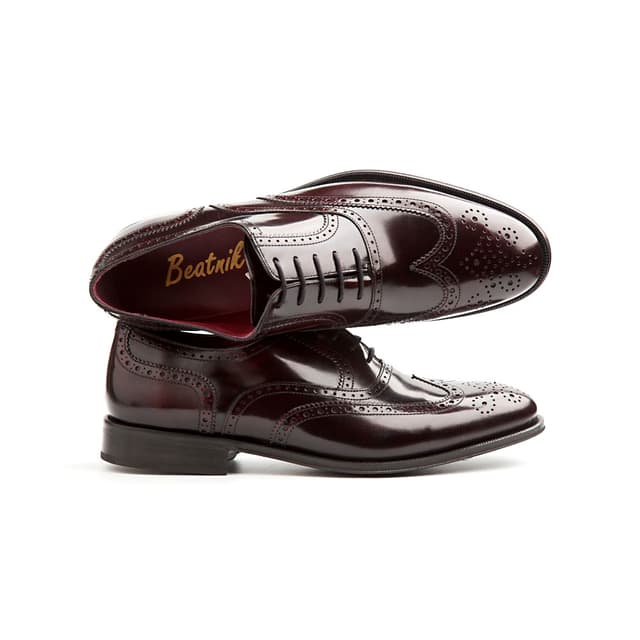
Beatnik Shoes is a Spanish footwear brand established in 2014. It designs shoes for women and men around familiar dress-shoe forms, then adds colour, contrast and details that give the pairs a stronger identity. Its shoes are made with a family workshop in Almansa, a Spanish town with a long shoemaking tradition. Oxfords, loafers, monk straps and boots form the core of the collection. Shoppers will find restrained leather styles alongside two-tone Oxfords and brighter finishes. Beatnik describes the use of selected leathers, carefully developed lasts and stitched soles; its site identifies Blake construction as part of its approach. These details matter when comparing the shoes’ shape, flexibility and potential for repair. The brand sells through its website, with product pages showing the materials and sizing for each style. Beatnik is a relevant option for someone who likes classic leather shoes but wants a pair that feels more expressive. The official pages reviewed confirm the 2014 start, but do not identify Juan Manuel Alonso as founder, so that attribution needs separate verification.

Cobbler Union featured image

Cobbler Union

USA · Est. 2014 · Mid-range

Cobbler Union is an Atlanta-based men’s footwear brand founded in 2014 by Stephen Beehler, Daniel Porcelli and Santiago Pereiro. Its shoes draw on bespoke shoemaking details while being offered as a ready-to-wear collection. Production takes place in small batches in Europe, with a team in Spain overseeing quality and consistency. The range includes Oxfords, derbies, loafers and boots in leather and suede, along with belts and other leather goods. Cobbler Union points to details such as carefully finished soles and its signature quilted heel cups. It also uses different lasts across its models, so the shape and fit of one style may differ from another. Its fit guidance is worth checking before choosing a size. Customers can shop through the brand’s website or visit its Atlanta location. Cobbler Union is especially relevant to people looking for a US-based seller of European-made dress shoes with distinctive finishing, while still wanting familiar styles they can wear regularly.

Idrese featured image

Idrese

USA · Est. 2018 · Luxury

Idrese is a US footwear brand launched in 2018, with Jawad Malik identified by the company as a co-founder. Its men’s dress shoes, boots and sneakers are made in a workshop in Almansa, Spain, a town with a strong shoemaking industry. The brand’s approach combines direct online shopping with an unusually broad set of choices for customers ordering a pair. Classic Oxfords, loafers and boots sit alongside casual sneakers. Idrese says its dress shoes and boots use Goodyear welt construction, which allows the sole to be replaced by a skilled repairer. Customers can also use its design tool to choose a style and materials, including Italian leathers. The custom programme lists US sizes 5–17 and several width options, making it relevant to shoppers who struggle to find a fit in standard dress shoe ranges. Idrese sells through its own website and provides a size guide and international delivery information. For shoppers comparing American footwear brands, the key distinction is its US brand identity paired with production in Almansa.

Carmina Shoemaker featured image

Carmina Shoemaker

Spain · Est. 1997 · Mid-range

Carmina Shoemaker is a family footwear brand from Mallorca, Spain. José Albaladejo Pujadas founded Carmina in 1997, opening its first store in Palma. The newer brand grew from a much longer Albaladejo family shoemaking tradition on the island, which the company traces to 1866. Its shoes are made in Mallorca, with the family workshop associated with the town of Inca. Carmina makes leather footwear for women and men, including Oxfords, derbies, loafers, monk straps and boots. Goodyear welt construction is central to its work, and customers can choose among different lasts, leathers and soles. Alongside its regular collections, the brand offers custom options for shoppers who want to select details for a pair. Carmina’s appeal lies in its breadth: someone searching for a classic black Oxford can also compare less common leathers and contemporary shapes within the same shoemaking house. Its website sells directly and offers information on styles and fit, while its original Palma store remains part of the brand’s presence on Mallorca.

Norman Vilalta featured image

Norman Vilalta

Spain · Est. 2004 · Luxury

Norman Vilalta is a Barcelona shoemaker specialising in men’s bespoke, made-to-order and ready-to-wear footwear. Originally a lawyer in Argentina, Vilalta trained in shoemaking in Florence before establishing his own Barcelona workshop in 2004. For roughly his first decade as a shoemaker, he worked exclusively on bespoke pairs, building shoes around individual clients’ feet and developing his approach to pattern making and finishing. That experience now shapes the ready-to-wear collection. Vilalta designs his own lasts and is known for an asymmetric pattern and distinctive pitched heel. His shoes and boots are finished by hand; the brand says this stage takes several hours per pair. The Condal Collection brings elements of his bespoke practice to shoes available in standard sizes. Shoppers can explore the collections online or visit the Barcelona store on Carrer d’Enric Granados. Vilalta appeals particularly to people interested in expressive designs, hand-finished leather and the connection between a shoemaker’s bespoke work and his ready-to-wear range.

TLB Mallorca featured image

TLB Mallorca

Spain · Est. 2018 · Mid-range

TLB Mallorca is a men’s shoemaker based in Inca, a historic footwear town on the Spanish island of Mallorca. Antonio “Toni” Llobera Barceló founded the brand in 2018, drawing on three generations of family experience in leatherwork. The brand makes its shoes and matching belts locally, with Toni overseeing production and paying particular attention to the shape and fit of each shoe. Its range centres on Goodyear welted leather footwear: Oxfords, derbies, loafers and boots designed for formal and everyday wear. The Main Collection offers classic styles, while the Artista Collection adds details such as narrower waists, closely cut heels and finer finishing. Customers seeking a particular combination of model, leather and fit can explore the made-to-order programme. TLB Mallorca is a useful name to know for shoppers comparing Spanish dress shoemakers. Its defining details are its Inca production, welted construction and range of lasts. The official site sells the collections directly and provides a size guide and fitting advice.

Patrizio Dolci featured image

Patrizio Dolci

Italy · Est. 1993 · Mid-range

Patrizio Dolci is an Italian footwear brand launched in 1993 by Confort Shoes, a manufacturer founded by the Fiscina family. The company’s production centre is in southern Italy, within the Cilento, Vallo di Diano e Alburni National Park. Its official history says the steps from design and cutting through stitching, lasting, and packaging take place in Italy. The tubular moccasin is the brand’s central style, but the men’s and women’s collections extend to sneakers, Derby shoes, boots, flats, and other casual footwear. Its shoes combine familiar shapes with an emphasis on comfort; individual listings specify the upper, lining, insole, and sole materials. That information is useful when choosing between a soft, unstructured loafer and a more substantial boot or sneaker. Shoppers can order from the official online store, which lists sizes and availability by product. The company ships internationally, and buyers outside the destination’s customs area may need to pay import duties or taxes.

Paolo Scafora Napoli featured image

Paolo Scafora Napoli

Italy · Est. 1956 · Luxury

Paolo Scafora Napoli is a family shoemaking business whose history begins in Naples in 1956. The business is named for its founder, Paolo Scafora. Paolo later developed the namesake luxury brand with his brothers, building on the family workshop and its tradition of handmade shoes. The collection includes Oxfords, Derbies, monk straps, loafers, boots, and sneakers. Customers can choose ready-to-wear shoes or explore made-to-order and bespoke services. The workshop uses construction methods including Bologna, Goodyear, Norwegian, and Tyrolean stitching, along with hand-painted finishes. Materials vary by shoe and include calfskin and cordovan. For a first purchase, the brand offers a “Fitting Pair” service: a trial shoe made to reproduce the shape and fit of the intended pair. Customers can then discuss any needed adjustments before placing the final order. Paolo Scafora also offers resoling, giving owners a way to maintain their shoes after wear. Purchases and service enquiries can be made through its official website.

Franceschetti featured image

Franceschetti

Italy · Est. 1926 · Luxury

Franceschetti is a men’s footwear brand based in Montegranaro, in Italy’s Marche region. Adelio Franceschetti started the workshop in 1926, making classic men’s shoes. The fourth generation, represented by Andrea and Stefania Franceschetti, now guides the brand. Its design and production remain in Italy. The range includes Oxfords, Derbies, loafers, monk straps, boots, sandals, and sneakers. Franceschetti organizes its shoes into Élite, Heritage, Urban Classic, and Active lines, covering formal footwear and more casual styles. Materials and construction vary by model, with product pages detailing the uppers, linings, soles, and fit. Shoppers can buy through the official website or the brand’s retail partners. Franceschetti uses European sizing and provides fit advice for individual shoes, which is useful if you have wide feet or a high instep. The website lists shipping options for Italy, elsewhere in Europe, and countries outside the EU. The brand emphasizes local production and durability, though its broader environmental impact is not clearly documented.

Enzo Bonafè featured image

Enzo Bonafè

Italy · Est. 1963 · Luxury

Enzo Bonafè is an Italian men’s footwear company founded in Bologna in 1963 by master shoemaker Enzo Bonafè. With support from his wife, Guerrina, and a small group of collaborators, he built the business around high-end materials, traditional techniques, limited production, and close control over every finished pair. The Enzo Bonafè collection includes men’s Oxford shoes, Derby shoes, loafers, monk straps, button boots, dress boots, and bespoke footwear. The workshop works with fine calfskin, suede, and selected exotic leathers, offering classic shapes for business, weddings, formal occasions, and developed personal wardrobes. Skilled artisans handle key stages such as pattern design, leather cutting, assembly, stitching, and polishing. Available construction methods include Blake, hand-welted, Norwegian, and moccasin techniques. The family-owned structure has helped the company maintain a small operation while passing specialist knowledge to younger craftspeople. For customers searching for handmade Italian men’s shoes from Bologna, Enzo Bonafè offers enduring style, detailed construction, and multiple levels of personalization. Its footwear appeals to clients who value classic design, quality leather, comfortable proportions, and shoes produced through traditional craftsmanship rather than large-scale industrial manufacturing.

Can't find what you're looking for?

We add new sites every week but if you have a specific request, let us know.

About Formal Shoes on From The Labels

Formal footwear is defined as much by proportion as polish. Closed-lacing Oxfords often appear more formal than open-lacing Derbies, while loafers and monk straps can move between business and occasion wear depending on their leather, sole and detailing. Pumps, flats and restrained loafers may serve similar settings for women. Dress codes vary, so the right silhouette depends on the event rather than the category name alone.

When assessing the top formal shoe brands known for quality craftsmanship, look for evidence that can be inspected: even stitching, clean edges, well-finished linings, balanced heels and a clearly explained construction method. Welted, stitched and cemented soles each have different price, flexibility and repair implications. To compare top formal footwear makers fairly, judge the specific model rather than a brand’s most expensive pair.

Fit matters especially in structured shoes. The last determines the internal shape, so two pairs with the same labelled size may feel different through the toe, instep and heel. Men comparing dress shoe brands should check width options and international conversions; women should also review heel pitch and toe shape. Use the profiles above to find independent makers, then confirm materials, sizing, care, resoling, stock and returns before ordering.

Frequently asked questions

What makes a good formal shoe brand?
Good formal shoe brands provide clear information about materials, construction, sizing and production. Consistent stitching, balanced proportions, comfortable linings and appropriate sole construction matter more than a recognisable logo alone.
How do I compare the best men’s dress shoe brands?
Compare the last shape, width options, upper and lining materials, sole construction, finish and repairability. The best choice should also match your dress code, wearing frequency and budget.
What is the difference between Oxford and Derby shoes?
Oxfords use closed lacing, creating a cleaner and traditionally more formal appearance. Derbies use open lacing, which can offer greater adjustability across the instep and a slightly less formal look.
Are all formal shoes made from leather?
No. Formal shoes may use leather, suede, velvet, satin, textiles or synthetic and vegan alternatives. Check the upper, lining, footbed and sole separately because one shoe can combine several materials.
Can formal shoes be resoled?
Some can, depending on their construction and condition. Welted and certain stitched soles are often designed with repair in mind, while many cemented shoes may be harder or uneconomical to resole.
How should formal shoes fit?
The heel should feel secure, the toes should have adequate room and the widest part of the foot should align with the shoe. Structured shoes should not depend on painful stretching.
Where can I buy from independent formal shoe brands?
Use From The Labels listing above to discover independent shoemakers and reach their official stores or authorised retailers. Confirm sizing, stock, construction, delivery, duties and return terms before purchasing.